Ammonium analysis in water: which method should you choose?
Ammonium (NH₄⁺) is a form of nitrogen found in many aquatic environments. Its analysis consists of measuring its concentration in water in order to monitor changes in an environment, control certain treatments or detect changes in water quality depending on the context.
In wastewater, drinking water, seawater or process water, the same value is not interpreted in the same way. The type of water, expected concentration, other available parameters and the method used all guide interpretation. This article helps you choose an appropriate approach according to the analytical context.
What does the presence of ammonium reveal?
Ammonium is part of the nitrogen cycle. It may occur naturally in water, but can also result from the breakdown of organic matter, biological transformation or external inputs. An ammonium value should therefore never be interpreted in isolation. Its interpretation must take into account the type of water, the treatment in progress, the condition of the environment and the other nitrogen forms measured.
Ammonium, ammonia and chemical equilibrium
In water, ammoniacal nitrogen exists in two forms: the ammonium ion (NH₄⁺) and free ammonia (NH₃). Their distribution depends mainly on pH and temperature. As pH increases, the proportion of free ammonia may rise, while at lower pH values, ammonium remains the dominant form.
This is an important point for interpretation, because two samples with similar ammoniacal nitrogen concentrations may behave differently if the pH, temperature or applied treatment differs.
Expressing the result as NH₄⁺ or NH₄-N
An ammonium result may be expressed in milligrams per litre of ammonium ion (mg/L NH₄⁺) or in milligrams per litre of ammonium nitrogen (mg/L NH₄-N). These two units do not represent the same mass. Before comparing two results, the unit used by the method, laboratory or instrument must therefore be checked. This precaution prevents a change in the way the result is expressed from being misinterpreted as an actual variation.
What a high concentration indicates
A high ammonium concentration may have several causes: the breakdown of organic matter, incoming effluent, incomplete biological conversion or a change in treatment conditions. The result alone cannot identify the cause.
To understand the situation, it must be cross-referenced with other data: pH, dissolved oxygen, nitrites, nitrates, temperature or the measurement point history. A temporary increase at the inlet of a wastewater treatment plant, in a basin or at a discharge point is not interpreted in the same way depending on site operation.
How should the analysis be adapted to the type of water?
The choice of method first depends on the water being analyzed. Wastewater, drinking water and seawater do not have the same expected concentrations or the same measurement constraints. Sample composition, potential interferences and the measurement range must be checked before testing begins.
Ammonium measurement in wastewater
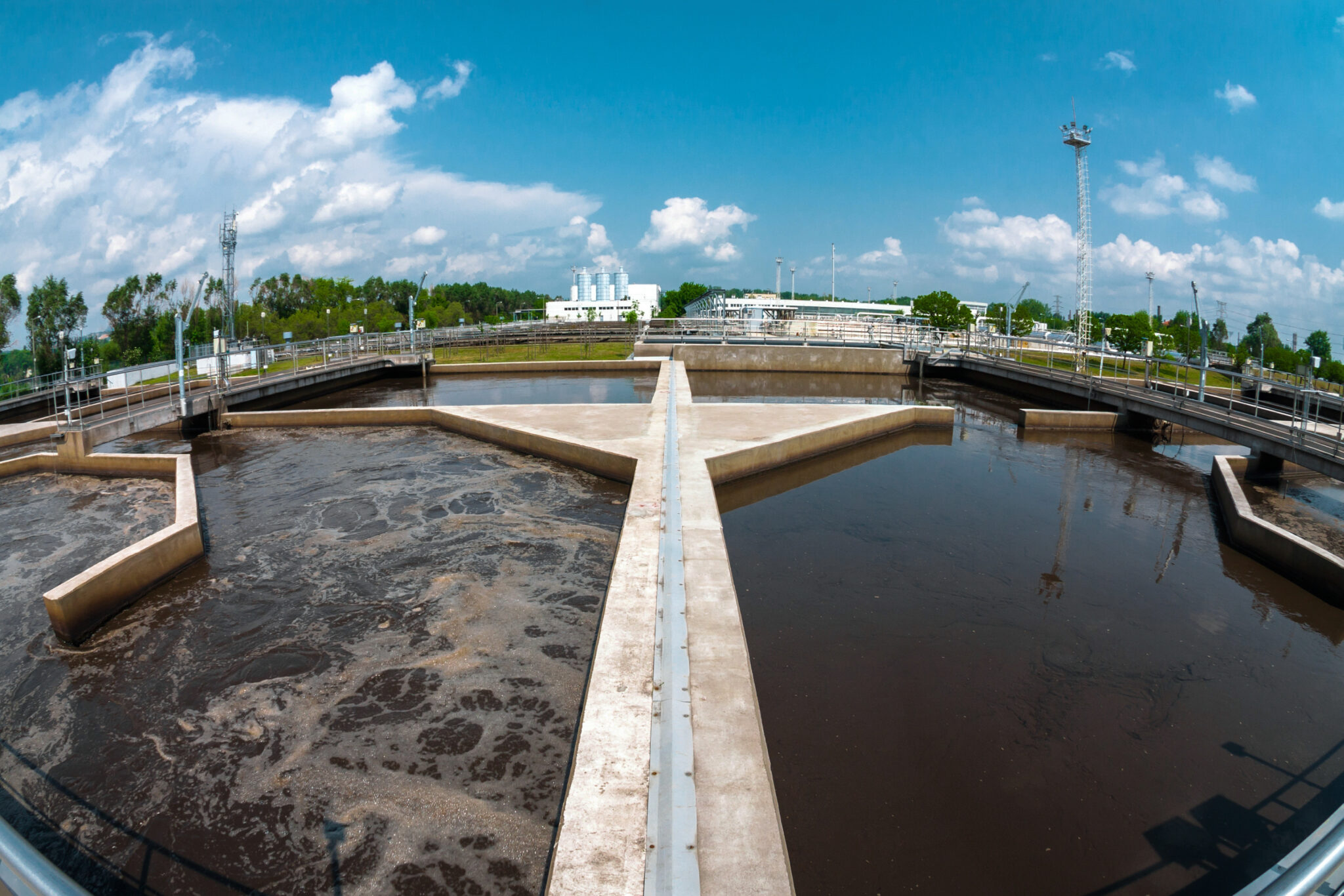
In wastewater, ammonium concentrations are often higher than in natural or drinking water because wastewater receives organic and nitrogen inputs from domestic use, industrial discharges or the breakdown of organic matter. Samples may also contain suspended solids, organic matter or other compounds that can affect the measurement.
Selecting the right measurement range is therefore essential. A range that is too low may lead to an over-range result, while an excessively broad range may not provide sufficient resolution for small variations. At the plant inlet, in a biological basin or at the outlet, the analysis method must be selected according to the expected levels and the purpose of the test.
Ammonium measurement in drinking water
In drinking water, ammonium is generally detected at low concentrations. Its presence may have various causes, including natural sources, external inputs or the treatment process itself.
Within the distribution network, ammonium can promote the growth of nitrifying bacteria, which gradually convert it into nitrites and then into nitrates. The method used must therefore be sufficiently sensitive to detect low concentrations and enable reliable monitoring of changes in water quality.
Interpretation then depends on the context: production, treatment, storage or distribution. The result can be compared with pH, temperature, nitrites or nitrates, depending on the tests carried out.
Ammonium measurement in seawater
In seawater, ammonium analysis may be included in the monitoring of coastal areas, aquaculture basins or sensitive natural environments. An increase in ammonium may be linked to organic inputs, biological activity in the environment, farming load or a local deterioration in water quality.
This type of water also presents an analytical constraint: salinity can interfere with certain colorimetric reactions. For analyses in marine environments, a method suitable for saline water must therefore be selected in order to limit interference and obtain a result that is consistent with the monitored context
Which method of analysis should be prioritised?
Rapid testing with a visual kit
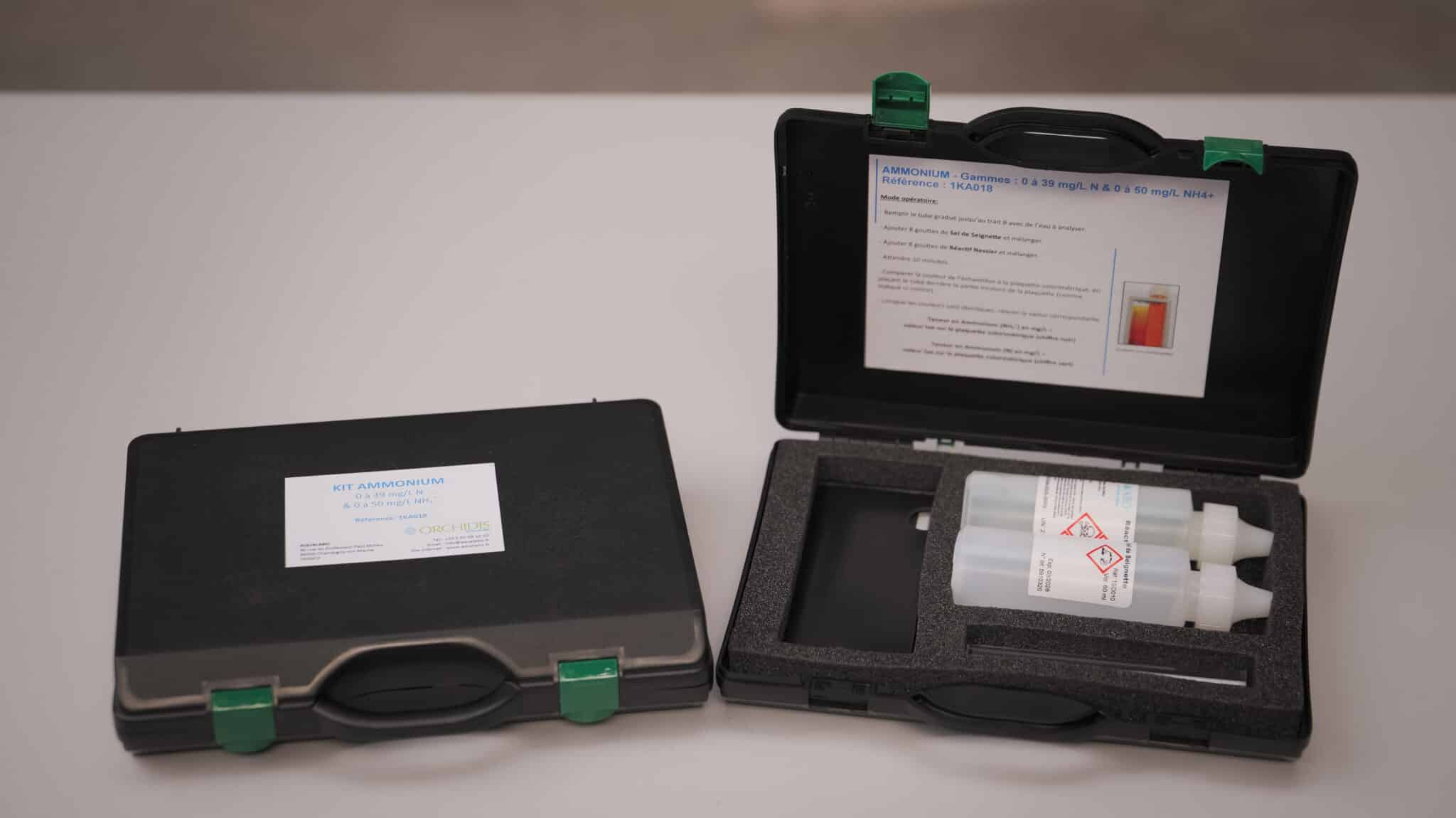
For spot checks in the field, a colorimetric kit provides a simple solution when the aim is to obtain a rapid estimate of the ammonium concentration.
The Aqualabo 1KA018 visual kit is based on a colorimetric reading after the reagents have been added. Results are available within a few minutes by comparison with a colour scale. No specific instrument is required, the kit is compact and each kit can be used to perform approximately 150 tests. This solution is suitable for rapid checks before carrying out a more precise analysis if necessary.
Instrumented colorimetric analysis
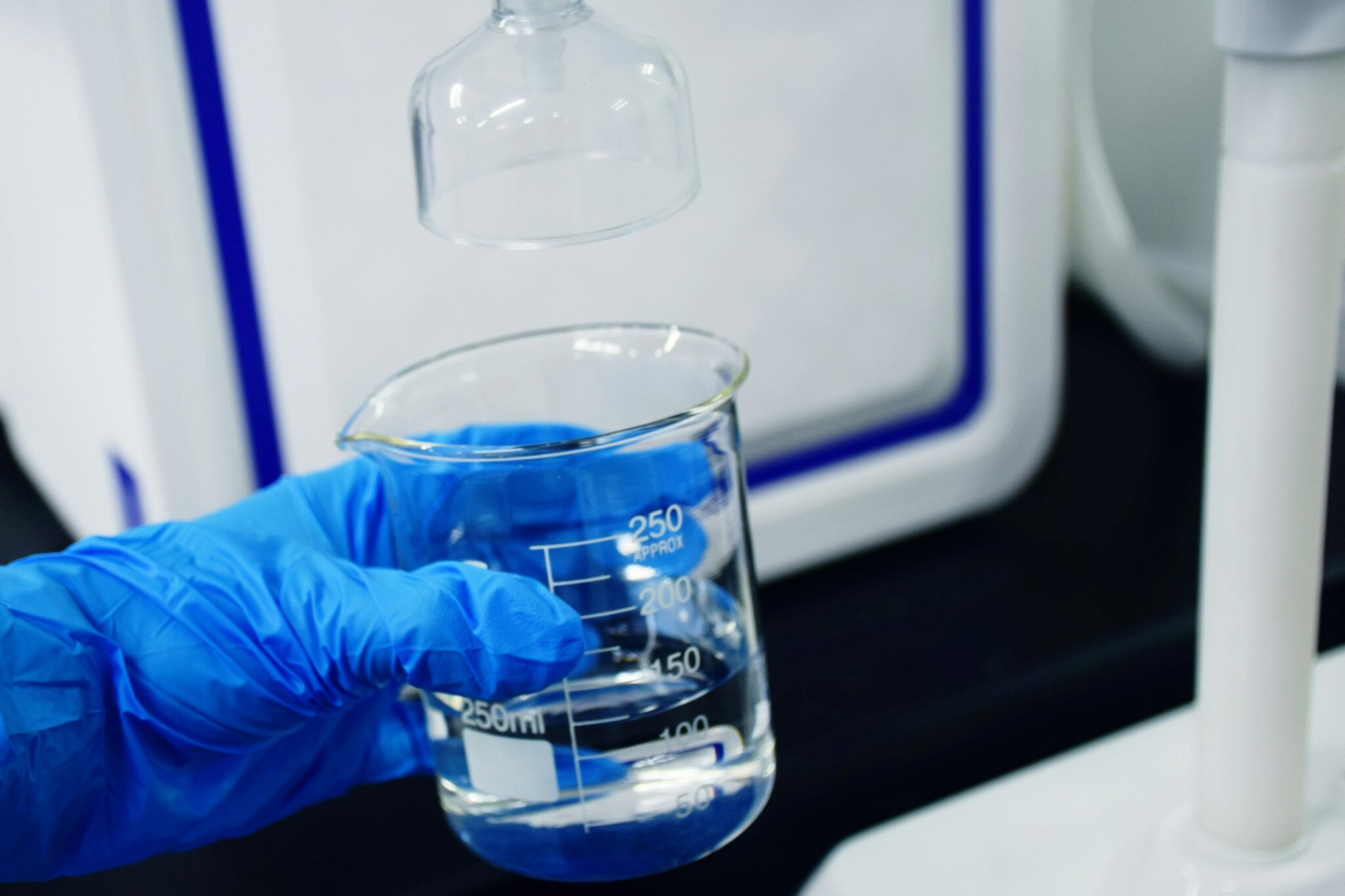
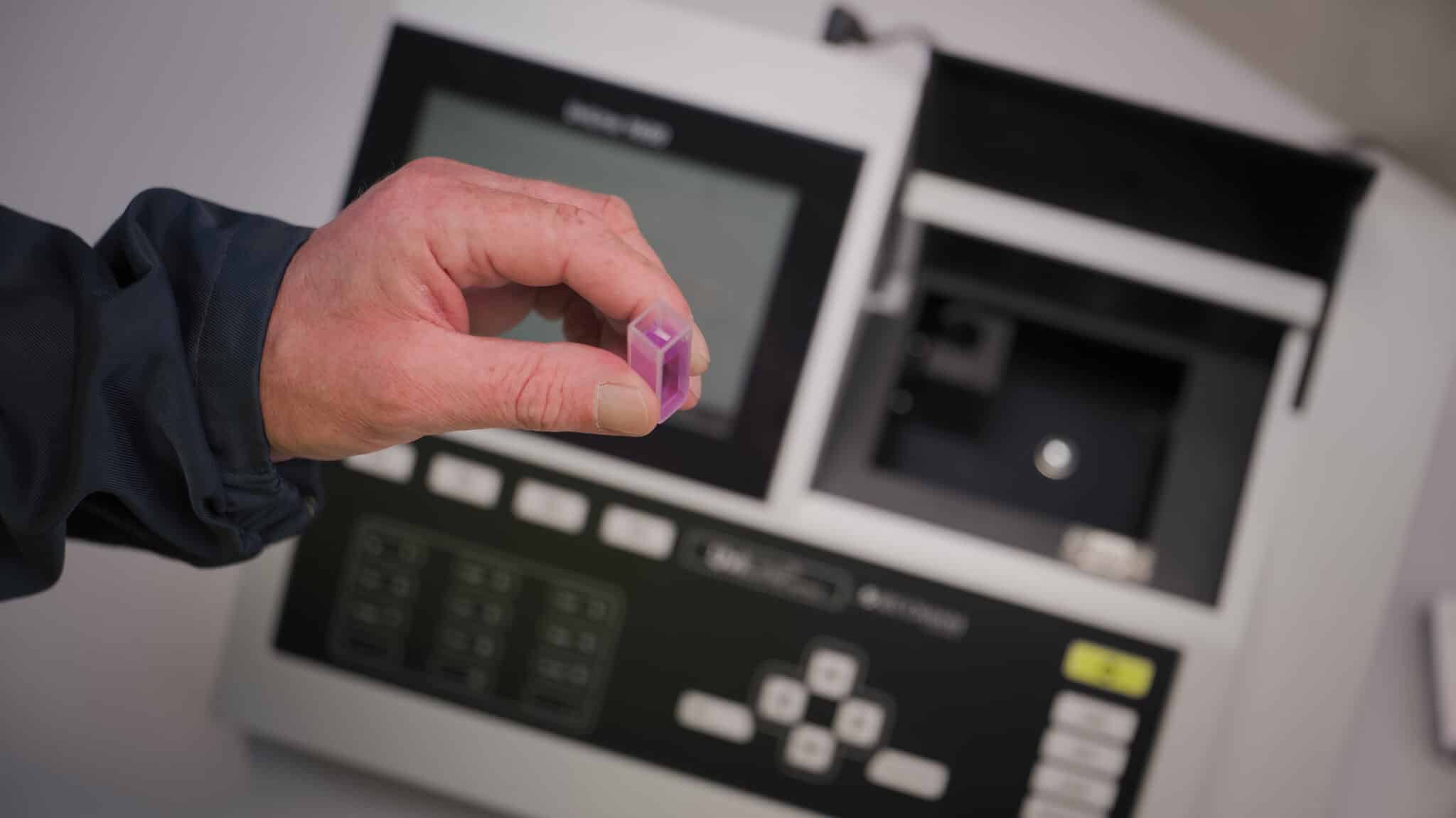
When a quantified and more reproducible result is required, ammonium can be measured using a spectrophotometer with suitable reagent kits. After the reaction, the sample develops a colour whose intensity varies with the ammonium concentration. The instrument measures this light intensity and calculates the concentration using a pre-programmed calibration curve.
Aqualabo offers several references depending on the expected concentrations and the type of water analyzed. The 1MS305 kit covers standard ammonium concentrations. The 1MS306 is intended for low concentrations, while the 1MS358 is designed for low-range analyses in seawater in order to limit interference caused by salinity. These kits are compatible with UVILINE spectrophotometers using pre-programmed calibration curves.
Adapting the method to the required level of accuracy
The choice between a visual kit and instrumented measurement depends on the required level of accuracy, but also on how the result will be used. A field check is often intended to quickly assess a situation or guide an immediate decision. Spectrophotometric analysis is more suitable when results must be compared over time, incorporated into reporting or used as part of a more structured monitoring programme.
The expected concentration should also guide the choice: a low ammonium concentration is not measured using the same method as a more heavily loaded effluent. The type of water, potential interferences and available measurement range must therefore be checked before selecting a solution.
Adapting the analysis to each context
Ammonium analysis is not limited to choosing a method. The type of water, expected concentrations, field constraints and required level of accuracy all shape the measurement strategy. A rapid check may be sufficient in some situations, while analytical monitoring will require a more suitable instrumented method.
AQUALABO supports professionals in selecting visual kits, reagents and instrumented solutions suited to the type of water, expected concentrations and field applications.