Warming of Swiss lakes: why monitor temperature and dissolved oxygen?
As a result of climate change, lakes have been warming in recent years. In Switzerland, the surface waters of most lakes have warmed by around 0.4°C per decade since 1980.
This has a direct impact on mixing dynamics and therefore on oxygen levels in the deeper parts of lakes. These changes directly concern lake managers, drinking water producers and organisations responsible for ecological monitoring. Temperature and dissolved oxygen are therefore measured at several depths to track how the lake changes over time.
Key points of the article
- The surface waters of Swiss lakes are warming, prolonging stratification and limiting seasonal mixing.
- When deep waters remain isolated for longer, their oxygen is replenished less effectively.
- Monitoring should combine temperature and oxygen measurements at several depths, either periodically or continuously, to identify where and when these changes occur.
The effects of warming on Swiss lakes
Earlier and longer thermal stratification
From spring onwards, the surface of lakes warms. This warmer water remains above the colder, denser deep water, greatly reducing vertical exchanges. The formation of distinct temperature layers within a body of water is known as thermal stratification. Stratification is a normal seasonal phenomenon, but its increasing duration in recent years is a cause for concern.
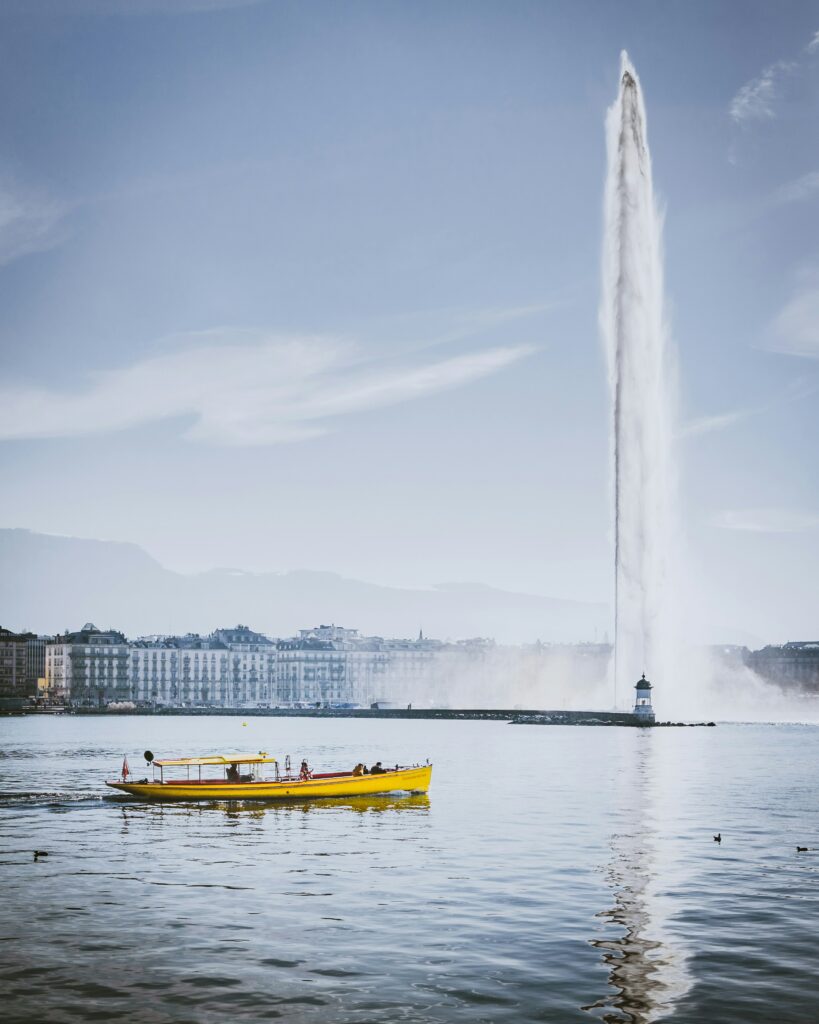
The Swiss Federal Office for the Environment (FOEN) has observed that stratification is beginning increasingly early in spring and breaking down later in autumn. Deep water layers therefore remain isolated for longer, resulting in several additional weeks without direct renewal of bottom water.
Less effective seasonal mixing
Autumn and winter cooling gradually reduces the temperature difference between the surface and deeper waters. In recent years, the Swiss Federal Office for the Environment (FOEN) has observed less complete mixing in Lake Constance, Lake Zurich and Lake Geneva, resulting in reduced oxygen supply to deep waters.
According to some simulations, lakes at medium elevations that currently undergo complete mixing twice a year could experience only one complete annual mixing event if temperatures continue to rise.
More limited oxygen renewal in deep waters
During the months of stratification, oxygen continues to be consumed in deep waters. Organism respiration and the decomposition of organic matter continue. However, oxygen-rich surface water can barely reach the bottom. The longer this period lasts, the more oxygen reserves decline. If the next mixing event remains shallow or only partial, deep layers receive even less oxygen and oxygen renewal may remain limited until sufficiently deep mixing occurs.
The consequences of oxygen depletion in lakes
Areas becoming less suitable for aquatic life
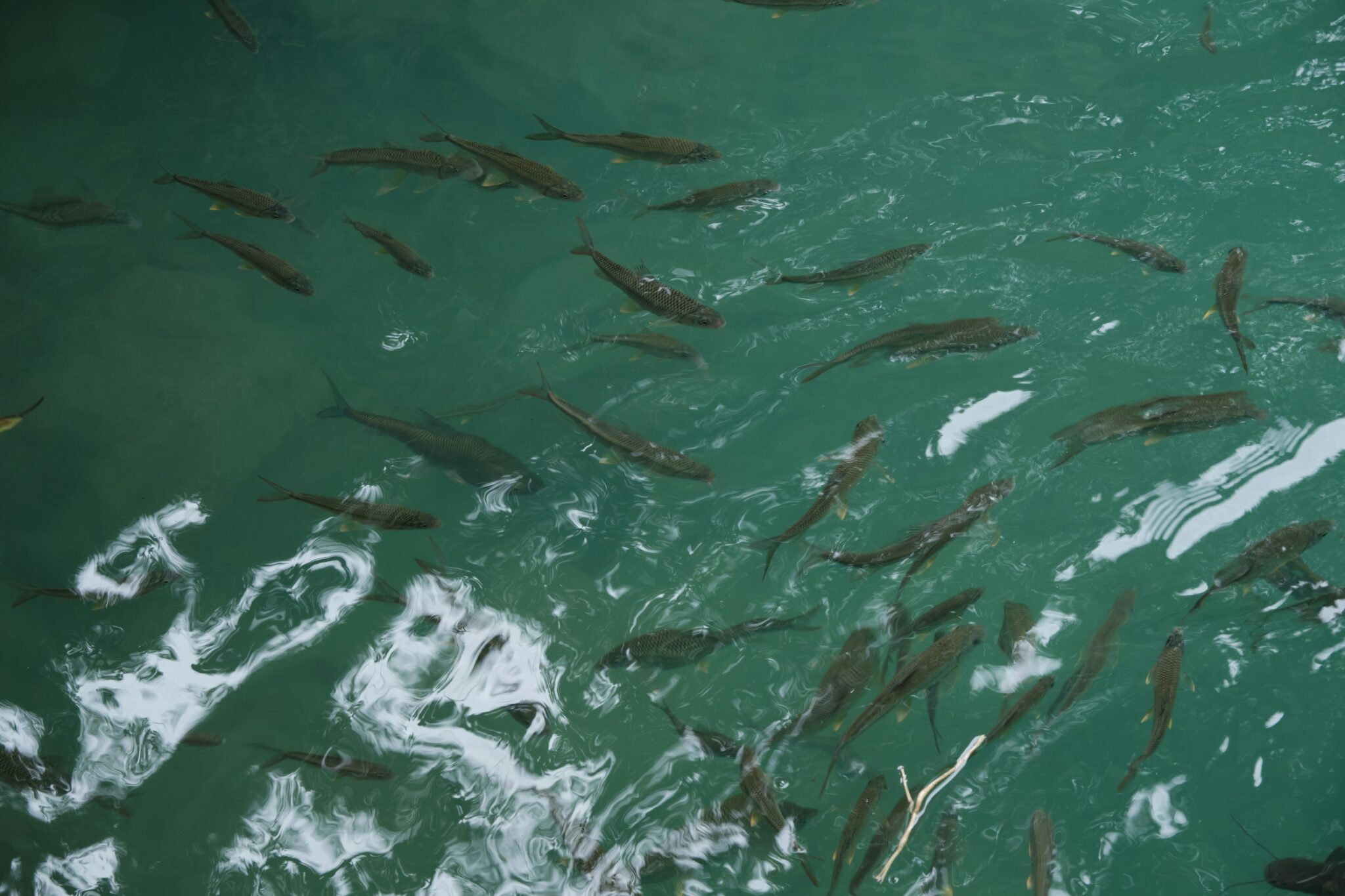
Deep waters remain cooler in summer and provide a refuge for several species adapted to these temperatures. When oxygen levels become insufficient, this habitat shrinks, which can leave some fish caught between surface waters that are too warm and deeper waters with lower oxygen levels.
When oxygen becomes scarce near the bottom, exchanges between the water and sediments also change. Some nutrients may then be released more readily into the water column. This change can subsequently promote the development of algae or cyanobacteria.
Monitoring dissolved oxygen therefore also provides information on changes in the lake’s ecological balance.
How should dissolved oxygen measurements be interpreted?
Interpreting concentration together with percentage saturation
A value in mg/L should not be interpreted on its own. At the same concentration, oxygen conditions are not the same in cold water as in warmer water, because the amount of oxygen that water can dissolve varies with temperature.
Percentage saturation places the measurement in this context:
O₂ saturation (%) = measured O₂ (mg/L) / O₂ at saturation (mg/L) × 100
A measurement of 8 mg/L therefore does not correspond to the same saturation level at different water temperatures. Considering both values together provides a more accurate view of the lake’s oxygen status and makes it easier to compare different depths or monitoring campaigns.

Monitoring temperature and dissolved oxygen in practice
Taking measurements at different depths
A vertical profile combines several measurements between the surface and the bottom. Measurement points can be placed closer together around the thermocline, where temperature changes rapidly, and then spaced further apart in deeper layers to monitor changes in oxygen below this transition zone.
For these monitoring campaigns, ODEON can be used with the OPTOD sensor, which measures dissolved oxygen and temperature simultaneously. Its oxygen measurement range extends from 0 to 20 mg/L, with readings also available as percentage saturation.
If several parameters need to be measured at the same depth, the TRIPOD can accommodate up to three sensors on a single probe.
Setting up autonomous, connected monitoring
For monitoring over several weeks or months, sensors can remain installed at the selected depths and record measurements at regular intervals. The resulting data series make it possible to track changes in temperature and deep-water oxygen levels throughout the season.
On a lake, a connected buoy can also support the monitoring system. Sensors are kept at the defined monitoring point and data can be transmitted remotely, reducing reliance on periodic field campaigns alone.
The TRIPOD probe communicates via Modbus RS-485 or SDI-12 and can be connected to a data logger or data acquisition unit.
With LOG AQUA, data from digital sensors are recorded and then transmitted via the GSM network to a secure web interface. Up to four digital sensors can be connected simultaneously.
Choosing a system suited to lake monitoring
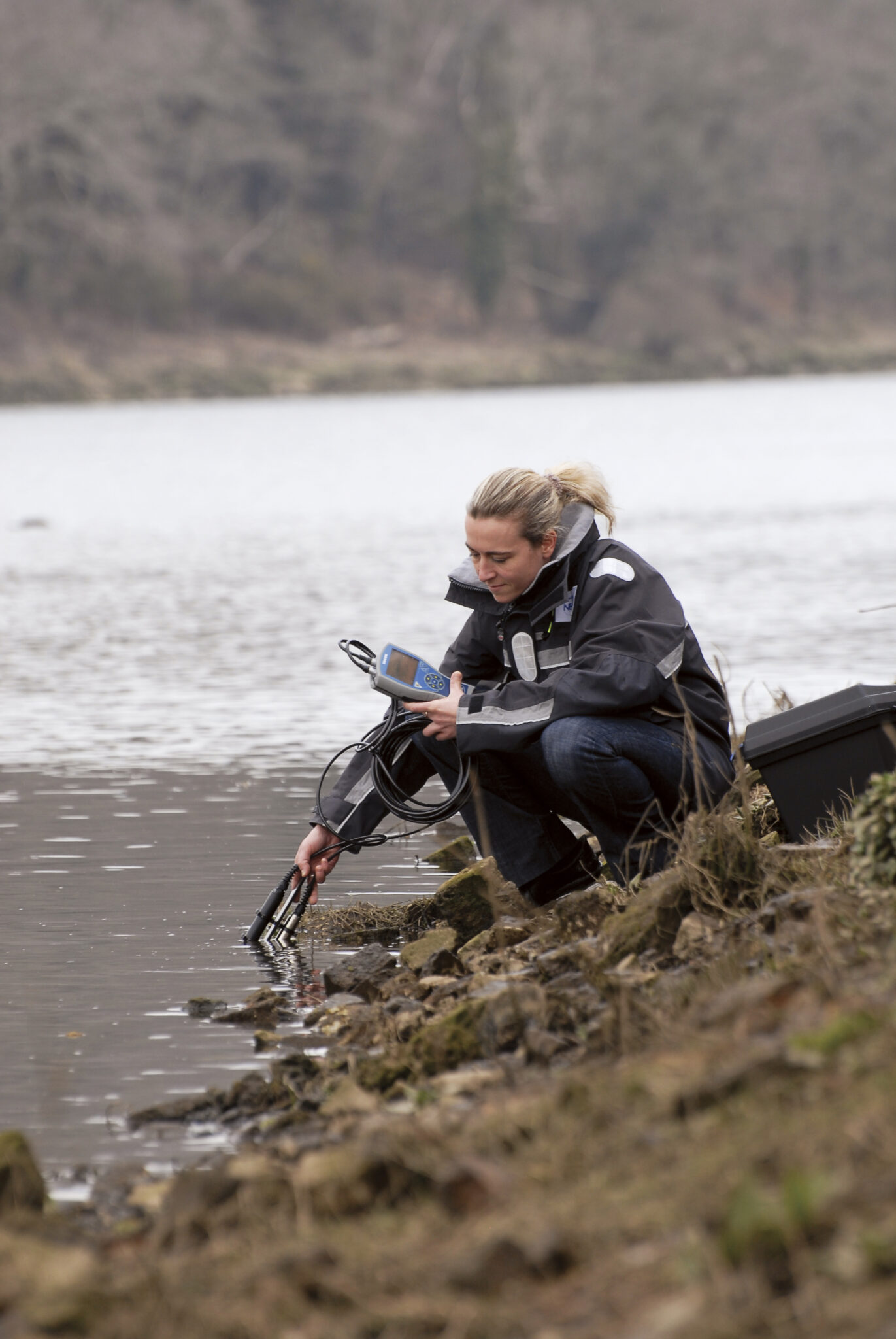
For a one-off monitoring campaign, measurements need to be taken on site at several depths using equipment that can be deployed easily. When monitoring is carried out over a longer period, the approach changes. A multiparameter probe, connected buoy or autonomous monitoring system can then remain in place to record data and transmit them remotely.
Aqualabo works with local authorities, engineering consultancies, scientific organisations and water managers on a wide range of monitoring configurations. The solutions available cover temperature, dissolved oxygen and other physicochemical parameters in lakes and other bodies of water, both in Switzerland and internationally.