Aquaculture in Norway: water quality monitoring for salmon farms
In Norwegian aquaculture, water quality parameters are directly linked to farming conditions, production continuity and on-site decision-making. Salmon farms operate in marine environments where dissolved oxygen, temperature, salinity, pH, turbidity and conductivity can vary depending on depth, currents, weather conditions, freshwater inputs and seasons. A single measurement is not always enough to understand what is happening around the cages.
For operators, environmental managers and instrumentation engineers, the challenge is to monitor the right parameters, at the right locations, and at intervals suited to the site’s operating constraints. This approach helps teams better interpret environmental variations, anticipate sensitive situations and rely on reliable data to manage farming operations.
Why water quality is critical in Norwegian aquaculture farms
Local factors that strongly influence farming conditions
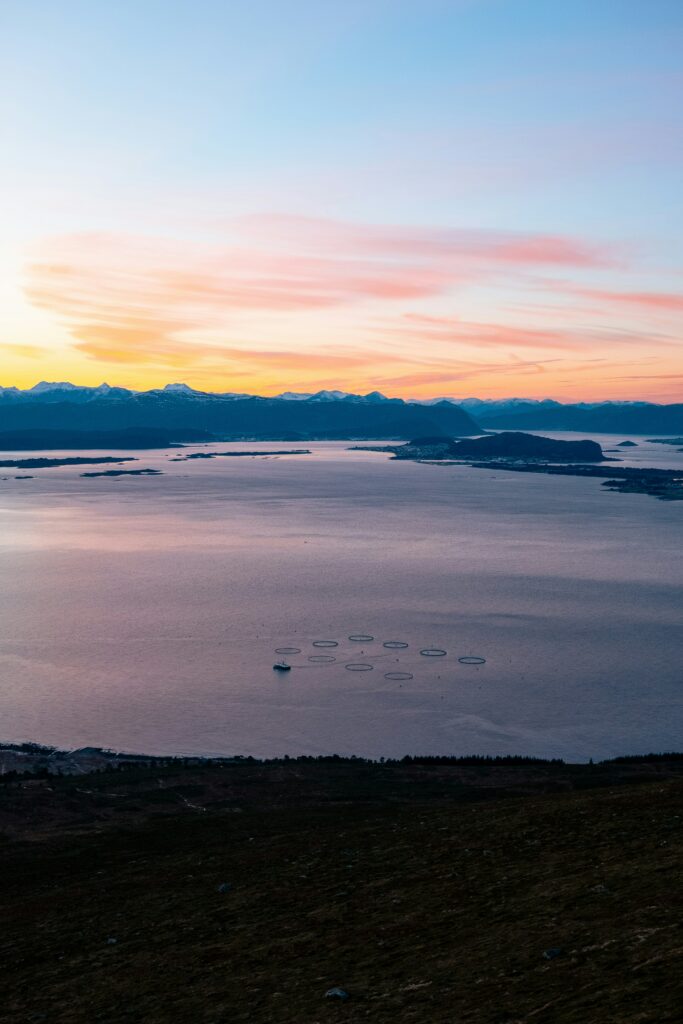
Norway is one of the world’s leading salmon producers, with aquaculture farms spread along an extensive coastline, between sheltered fjords and more exposed coastal areas. This diversity of sites creates very different farming conditions from one operation to another. Depth, currents, freshwater inputs, weather conditions and water exchange can all modify the parameters measured around the cages.
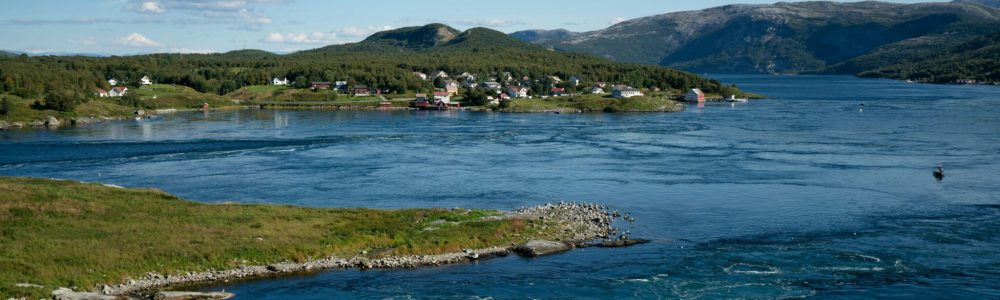
Marine farms are directly exposed to currents, tides, rainfall events, wind and seasonal changes. In Norwegian fjords, these factors can create differences between the surface, intermediate depths and areas close to the cages.
These variations rarely affect just one parameter. A rise in temperature can reduce oxygen availability. Freshwater input can modify salinity. Turbidity can increase after a weather event or local resuspension. For teams, the objective is not only to identify an abnormal value, but to understand the overall evolution of the farming environment.
Enhanced monitoring for environmental and health surveillance
Norwegian salmon farms operate in an environment where water quality monitoring goes beyond production management alone. In a structured industry with a strong export focus, controlling farming conditions also contributes to environmental monitoring requirements, health surveillance and traceability of practices.
Variations in water quality do not only affect the physiological conditions of the fish. They can also indicate an environmental change likely to influence their behaviour, feeding activity or the overall balance of the farming site. Reliable data, monitored over time, help operators document local dynamics, strengthen their observation capacity and respond more quickly when a deviation occurs .
Which water quality parameters should be monitored in salmon farms in Norway?
Dissolved oxygen near cages and at depth
Dissolved oxygen is one of the most critical parameters in salmon farming. Its concentration varies according to several factors: biomass, feeding activity, water renewal, temperature, depth and water column stratification. A measurement taken only at the surface may therefore be insufficient, especially on sites where conditions change between different water layers.
Oxygen monitoring must be designed according to the actual site configuration, with control points placed close to farming areas and, where necessary, at different depths. A localized deficit can go unnoticed if the measurement is taken outside the area mainly occupied by the fish. Representative monitoring makes it possible to detect situations requiring increased vigilance or further investigation without delay.
Temperature and salinity in fjords and coastal environments
Temperature and salinity are essential for understanding the dynamics of Norwegian aquaculture sites. Temperature influences fish metabolism and directly affects oxygen solubility in water. When temperature increases, oxygen availability can decrease. The interpretation of dissolved oxygen measurements must therefore always take the temperature of the environment into account.
Salinity provides complementary information on water movements, freshwater inputs and site stratification. In fjords and coastal environments, rainfall events, river inputs or changes in currents can create differences between surface waters and deeper layers. By monitoring temperature and salinity together, teams can more easily distinguish a seasonal trend from a one-off change in site conditions.
pH, turbidity and conductivity as complementary indicators
pH, turbidity and conductivity provide useful data to complement water quality analysis in salmon farms. pH provides information on the chemical balance of the environment. Turbidity can indicate an increased presence of suspended solids, local resuspension or a change following a weather event. Conductivity helps characterize variations in the ionic composition of the water and can support the interpretation of salinity changes.
These parameters do not replace dissolved oxygen monitoring, but they provide the context required for analysis. A drop in oxygen combined with a rise in temperature, a change in salinity or an increase in turbidity does not point to the same situation as an isolated variation.This combined analysis gives teams a clearer picture of what is happening around the cages.
How to build a monitoring strategy adapted to the site?
Choosing measurement points according to the cages
The choice of measurement points determines the quality of interpretation. In a salmon farm, values can vary depending on depth, exposure to currents, fish density or proximity to a water renewal area. A value may be technically reliable, but of limited use if it is recorded in an area that does not reflect the conditions experienced by the fish.
Teams must therefore define locations according to the site configuration: swimming area, more exposed cages, less well-renewed sectors, depths to monitor or areas subject to rapid variations. The objective is to obtain a reading that is useful for operations, without unnecessarily multiplying measurement points when they do not provide additional information.
Comparing parameters helps put each value into context.
An effective monitoring strategy cannot rely on the analysis of a single indicator. A decrease in dissolved oxygen does not have the same meaning if it occurs alongside a rise in temperature, a change in salinity or an increase in turbidity. Cross-referencing parameters places each value back into its context.
In an aquaculture farm, this approach helps differentiate between several situations: seasonal evolution, a change in water mass, local stratification, freshwater input or a variation more directly related to farming conditions. It also helps limit overly rapid interpretations and better guide field decisions.
Adapting measurement frequency to site constraints
Measurement frequency depends on the level of site variability, the parameters monitored and operational needs. On a site exposed to rapid changes, checks that are too far apart may miss short events. Conversely, very high-frequency monitoring is only useful if the data are actually consulted, interpreted and used by the teams.
Dissolved oxygen and temperature may require more regular attention, as their variations directly influence fish living conditions. Other parameters, such as turbidity, conductivity or pH, can be monitored for trend analysis, diagnostics or confirmation. This organization makes it possible to focus measurement efforts on the information most useful for production continuity and environmental monitoring of the site.
Aqualabo: solutions for water quality monitoring in aquaculture
Carrying out on-site multiparameter measurement campaigns
When on-site checks need to provide a quick and complete reading of environmental conditions, a portable multiparameter device makes it possible to measure several essential indicators directly on site: dissolved oxygen, pH, conductivity, salinity, turbidity or temperature. This approach is particularly suited to control campaigns, field checks and spot diagnostics.
The ODEON range enables on-site multiparameter measurements with a portable solution adapted to field operations and regular checks in aquaculture.
Ensuring targeted dissolved oxygen monitoring
Dissolved oxygen is one of the most sensitive parameters in aquaculture, particularly in farms where environmental conditions can change rapidly. Dedicated instrumentation makes it possible to monitor this parameter accurately and detect variations that may influence farming conditions more quickly.
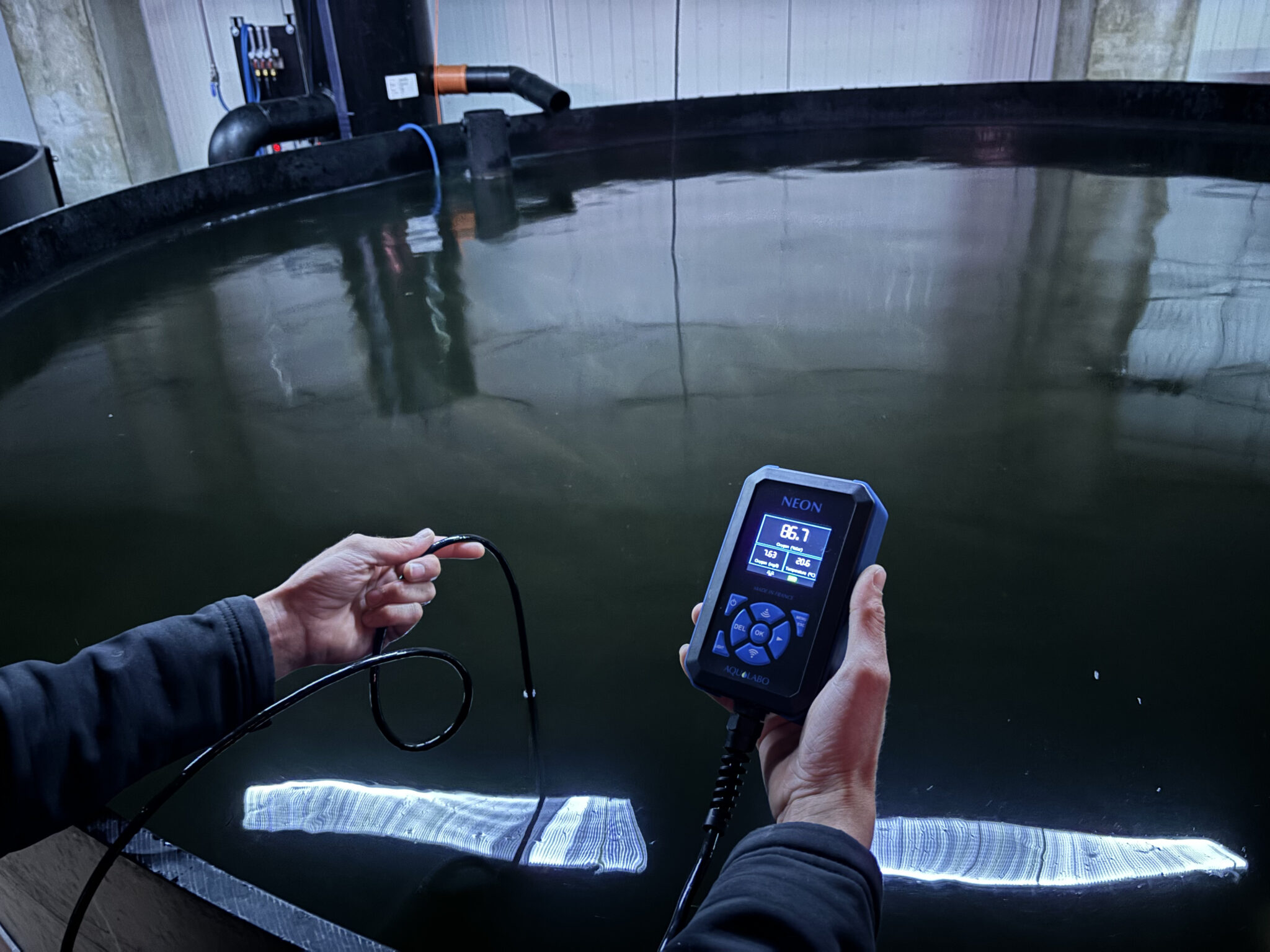
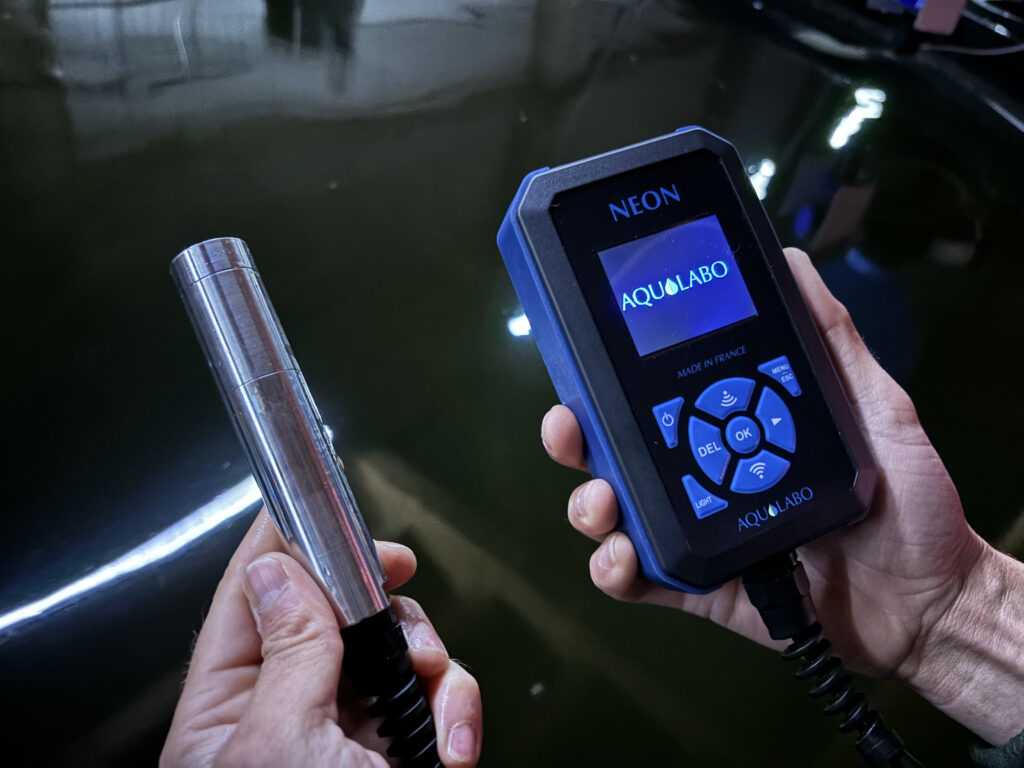
With NEON OPTOD, teams have a solution dedicated to dissolved oxygen measurement, adapted to field checks and targeted monitoring needs. This approach is particularly relevant when oxygen must be monitored near cages or at different points across the site.
Supervising water quality remotely on extensive sites
On large-scale farms or sites requiring regular monitoring, connected solutions facilitate data transmission and remote consultation. This approach makes it easier to monitor several measurement points, improve team responsiveness and reduce dependence on systematic manual field checks.
For continuous supervision, Aqualabo offers multiparameter systems that centralize sensor data and track trends over time. Depending on the site configuration, these solutions can help structure more regular monitoring, with better visibility over the parameters monitored and their variations.
The ACTEON 6000 can be used for continuous multiparameter monitoring, while connected architectures such as AquaMod make it possible to transmit and centralize measurement data when site constraints require remote supervision.
Adapting water monitoring to salmon farms
Aquaculture monitoring in Norway requires an accurate reading of the specific conditions found in salmon farms: cage depth, water circulation, seasonal variations, salinity, temperature and oxygen availability. In this context, data reliability depends on the choice of instruments, their location and the frequency of checks.
Aqualabo supports aquaculture professionals with solutions such as ODEON for field campaigns, OPTOD for dissolved oxygen monitoring and continuous monitoring systems adapted to site constraints. From field checks to regular monitoring, this equipment helps teams better interpret environmental variations, anticipate sensitive situations and make more reliable operational decisions.
For a broader approach to water quality monitoring in fish farming, also read our dedicated article.