How to monitor turbidity during dredging operations?
Turbidity monitoring during dredging operations is organised before work begins: the initial conditions must be established, measurement points defined and the planned protocol then applied throughout the operations. Monitoring makes it possible to identify an increase caused by sediment resuspension and track its development around the area.
Monitoring procedures are defined by the project specifications. Measurements may be taken periodically before and during the works, or continuously with data recording and transmission. A water intake, lagoon or other sensitive area may also require specific monitoring points.
Key points of the article
- Turbidity and total suspended solids (TSS) do not measure the same thing: turbidity reflects an optical effect, while TSS measures the concentration of suspended solids.
- The positioning of monitoring points depends on how the site functions: upstream/downstream in rivers, and currents and depth in marine or estuarine environments.
- The choice between spot measurements and continuous monitoring depends on the duration of the works and the level of monitoring required.
Why monitor turbidity during dredging operations?
Monitoring sediment resuspension during the works av
Mechanical or hydraulic dredging causes particles to become resuspended. Turbidity is intrinsically linked to the presence of these particles in the water and provides a rapid indication of how conditions change during the works.
Measurements taken around the dredging area provide information on changes in the turbidity plume, meaning the area of water made more turbid by suspended particles. Where sensitive areas are located nearby, monitoring points are positioned to detect any potential spread towards these areas.
Interpreting turbidity without confusing it with TSS
Turbidity and total suspended solids (TSS) describe two different characteristics: turbidity reflects the optical effect of particles in the water, whereas TSS corresponds to their mass concentration. An increase in turbidity therefore indicates a change in particulate load, but it does not directly provide the TSS concentration for the environment concerned.
When should turbidity monitoring be supplemented with other parameters?
Turbidity alone does not describe all the effects of dredging operations. The protocol may also include measurements of dissolved oxygen, pH, temperature or conductivity. These parameters are selected according to the monitoring requirements for the site and the characteristics of the environment.
How to establish a reference before dredging begins?
Analyses before work begins
Measurements taken on site provide a reference for turbidity under conditions unaffected by the works. Values recorded during dredging can then be compared with these initial conditions.
The protocol may therefore define a single reference before work begins or repeated reference measurements throughout the project. Measurement conditions must remain comparable, particularly in terms of location, depth and hydrological conditions.
Taking natural variations in the environment into account
Turbidity varies naturally. Rainfall can carry more particles into a watercourse, while an increase in flow or stronger agitation can resuspend sediments already present. In estuarine or marine environments, changes in currents and tides also affect particle dispersion. These phenomena alter the amount of suspended particles and must be ruled out before an increase is attributed to the works.

Where should measurements be positioned around the work area?
Defining a reference point and a point influenced by the works
To compare the condition of the environment with the influence of the works, the protocol may combine a reference point located outside the directly affected area with a monitoring point located under the influence of the dredging operations. In a river, for example, an upstream point can be compared with a downstream point.
The number of points increases if several sensitive areas need to be protected or if the work area moves during the project.
Adapting the location of monitoring points to site-specific issues
The measurement point must be located along the potential pathway of resuspended particles. In marine environments or estuaries, its position must take into account the direction of currents and how they change throughout the day.
Depth must also be taken into account in the analysis. A measurement taken near the surface does not necessarily describe the same conditions as one taken lower in the water column. Using a fixed depth makes it easier to compare results throughout the works.
What constraints do dredging operations place on the equipment?
Planning maintenance for a continuously installed sensor
When equipment remains submerged, deposits and biofouling are among the constraints to consider. On an optical sensor, fouling of the measurement area gradually affects the signal and makes the measurement less reliable. Cleaning operations must therefore be planned from the deployment stage. For long-term monitoring, anti-fouling protection or a cleaning system can help extend the interval between interventions, without eliminating the need for visual inspections and maintenance.
With continuous monitoring, data recording covers the entire monitoring period. If the protocol provides for remote access or threshold alerts, the system must also ensure data transmission throughout the works. Some of our instruments are available with data transmission systems.
Examples of turbidity monitoring during dredging operations
Establishing a threshold before dredging and monitoring downstream
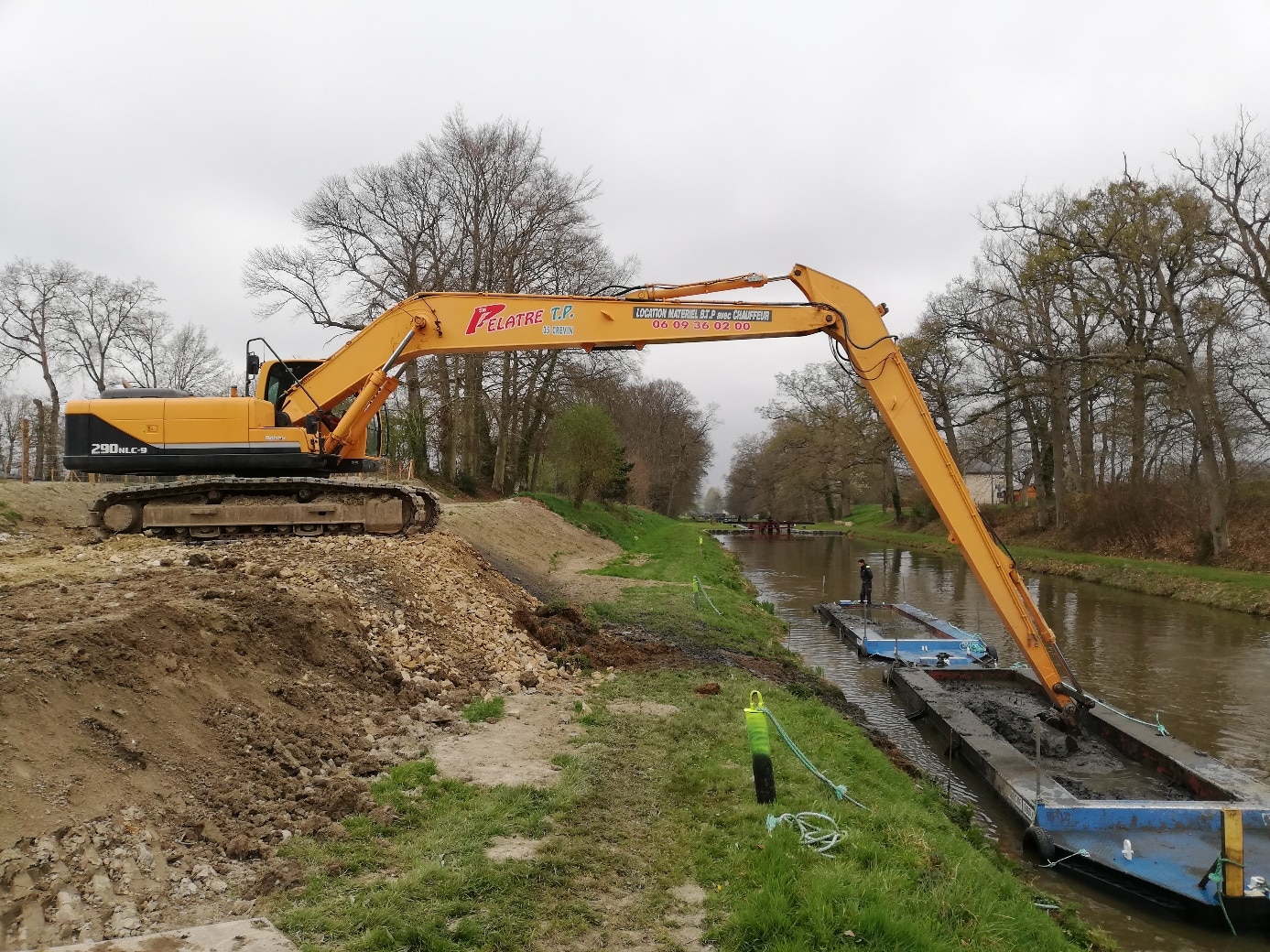
Our customer I-marine solutions carried out a mechanical dredging project involving approximately 10,000 m³ across several sections of the Ille-et-Rance Canal and the Vilaine. The project involved sensitive areas, including a Natura 2000 site and a drinking water intake.
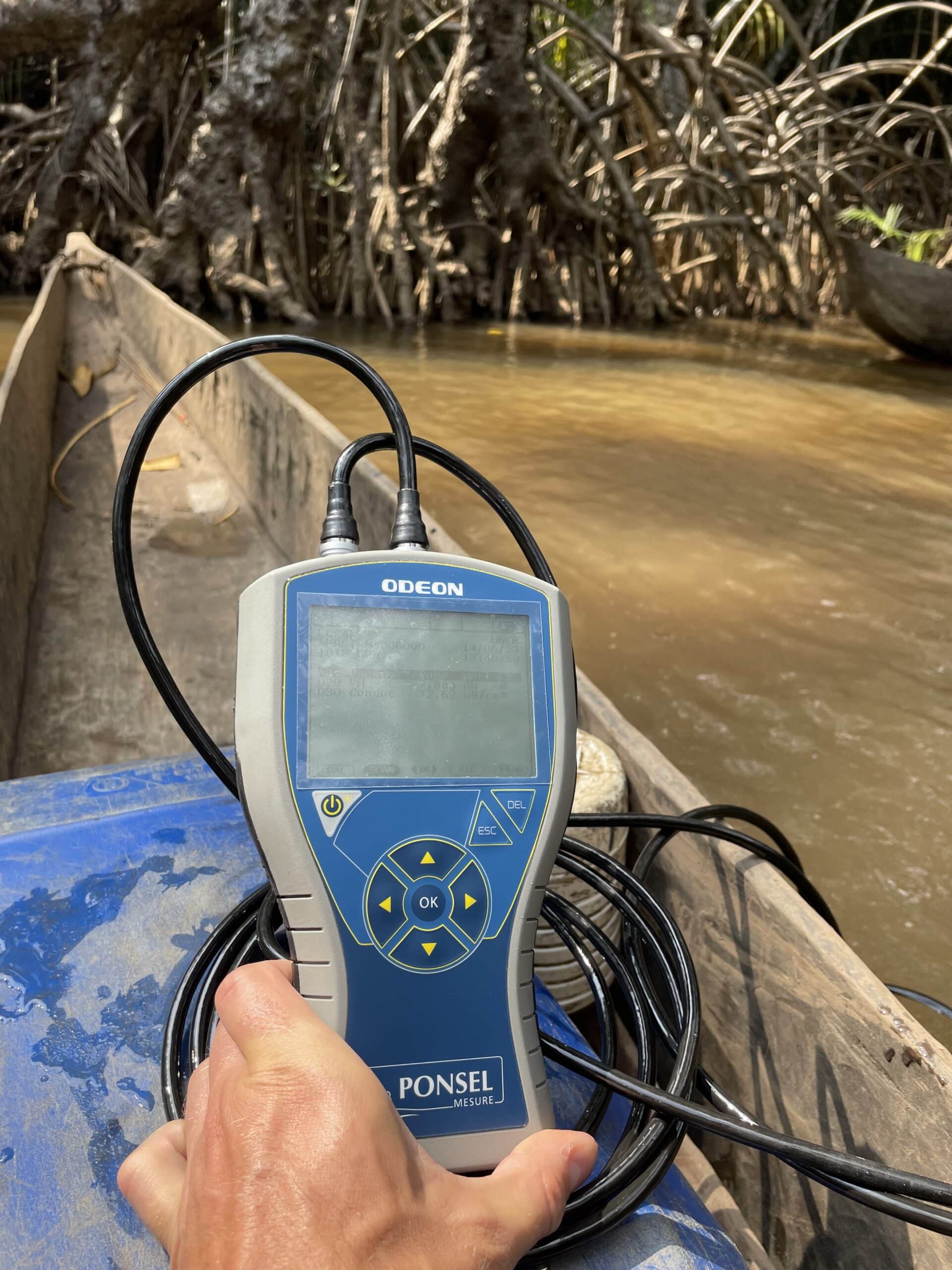
Each day, a threshold was established before dredging began. The teams then carried out checks 100 metres downstream of the works. The portable ODEON instrument was used with pH, oxygen and turbidity/TSS sensors. Several parameters were measured: TSS, dissolved oxygen, temperature and pH. The equipment was rented for the duration of the project.
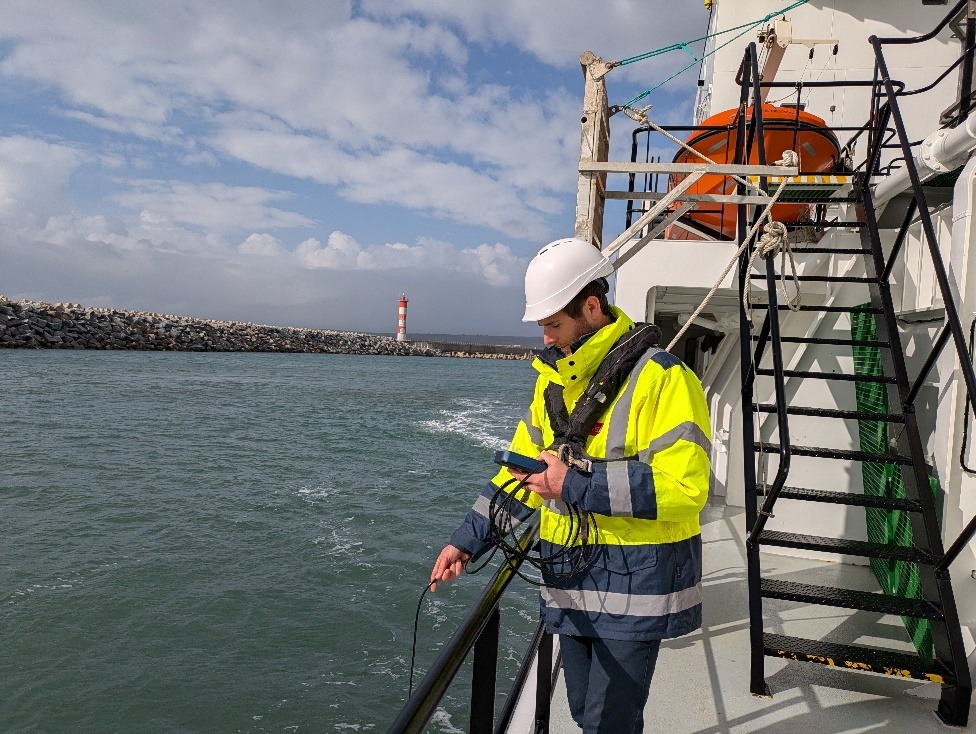
Checking turbidity as part of a project monitoring protocol
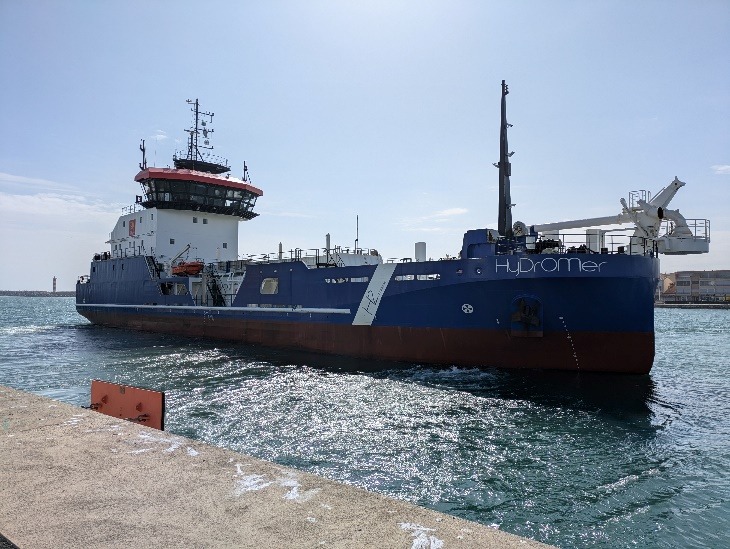
In Port-La Nouvelle, on the Mediterranean coast of southern France, prefectural orders required turbidity monitoring during dredging operations to protect the Bages-Sigean lagoon. Currents could carry suspended particles towards the Grau, the channel connecting the lagoon to the Mediterranean Sea. When a threshold was reached, each operator was required to monitor turbidity in their respective work area.
The Occitanie Region selected our NEON NTU instrument for these measurements, rented for a period of two months. Chosen for its portability and ease of use, the NEON NTU formed part of the management protocol implemented when thresholds were exceeded and therefore met the need for rapid checks directly in the field.
Adapting the monitoring system to your field constraints
Aqualabo supports marine and river works projects in France and internationally, with equipment suitable for turbidity measurement as well as the analysis of other water quality parameters. When your monitoring needs are limited to the duration of the works, we offer a rental service providing access to several of our products: ODEON, NEON, ACTEON, as well as data loggers and transmitters.