Phosphate analysis in water: when and how should it be measured?
In wastewater, discharges, technical circuits or process water, phosphate analysis in water is used to check for the presence of orthophosphates, or phosphorus converted into orthophosphate depending on the protocol used. It can be carried out using a visual field kit or an instrumented colorimetric method, depending on the required level of precision.
For a local authority, an operator or a maintenance technician, phosphate measurement in water helps document a discharge, monitor changes after treatment or verify a chemical balance. This article explains when to include this test in field monitoring, which method to choose and how to make results more reliable.

Why monitor phosphates in water?
Understanding their role in water quality
Phosphorus is a nutrient required for biological functions in aquatic environments. In water, it can be present in several phosphate forms: orthophosphates, polyphosphates or organic phosphorus compounds. This distinction is important, as not all forms are necessarily measured in the same way depending on the protocol used.
Phosphates can come from domestic wastewater, industrial discharges, treatment products, agricultural runoff or technical circuits using phosphate-based formulations. Their presence therefore does not have the same meaning depending on the type of water being tested.
Identifying the risks of excessive concentration
When concentrations become too high in an aquatic environment, phosphates can promote rapid growth of algae and aquatic vegetation. In freshwater, this excess of nutrients can contribute to eutrophication: less light penetrates the water, dissolved oxygen may decrease and the biological balance of the environment deteriorates.
In industrial circuits, boiler rooms or process water, interpretation is different. The result must be considered in relation to the treatment applied, internal guidelines and the other parameters monitored. A high, low or unstable value cannot be interpreted on its own: it must be placed within the actual operating context of the installation.
How does phosphate testing in water work?
Distinguishing the phosphate forms measured
In water, phosphates can be present as orthophosphates, polyphosphates or organic phosphates. Orthophosphates are generally the form directly measurable by colorimetric methods. When the sample contains polyphosphates or organic phosphorus, a preparation step may be required to convert these forms into orthophosphates before analysis.
This distinction avoids overly quick comparisons between two results. A test performed on directly available orthophosphates does not provide the same interpretation as a method that includes prior conversion. The result must therefore always be interpreted according to the protocol used, the type of water tested and the objective of the analysis.
Understanding the colorimetric principle
Colorimetric testing is based on a reaction between the phosphates present in the sample and a specific reagent. The phosphate then forms a coloured complex, the intensity of which varies according to concentration. In many methods, this reaction involves ammonium molybdate, followed by a visual or instrumented reading of the colour obtained. The sample may be filtered to limit interference caused by particles. The final reading is then carried out by colour comparison or using a spectrophotometer.

When should phosphate analysis be included in field monitoring?
During a spot check
A spot check makes it possible to quickly test a sample, compare two measurement points or confirm a situation observed on site. In installations, analysis can also be useful after recommissioning, water make-up, a treatment modification or a maintenance operation, in order to verify consistency with operating instructions.
As part of regular monitoring
Phosphate testing in water becomes useful when it is repeated at the same points, using a consistent method. Successive readings help identify a trend, a gradual change or an unusual variation after a process modification. For a local authority, this monitoring may concern wastewater, discharges or certain sensitive points in the network. For an industrial maintenance team, it may support the monitoring of a treated circuit.
After a deviation or treatment modification
Phosphate analysis can be added after a deviation observed in other parameters: pH, conductivity, turbidity, discharge quality or treatment evolution. It helps verify whether the phosphate concentration contributes to the observed change or remains stable despite the deviation.
The same logic applies after a dosage adjustment, a change of product, partial draining, recommissioning or an intervention on a circuit.
How to ensure successful phosphate analysis?
Adapting the method to the type of water tested
Reliable analysis starts with a method suited to the type of water. Clear, lightly loaded water does not involve the same constraints as wastewater, industrial discharge, process water or a treated technical circuit. Measurement ranges, detection limits and possible interferences must be checked in the technical documentation for the method used.
Respecting sampling and reading conditions
Sampling directly influences the quality of the result. The sample must be representative of the point being tested, collected under consistent conditions and analyzed within the time frame recommended by the method. A poorly rinsed bottle, a sample taken from a stagnant area or a reading taken too late can distort interpretation.
For visual kits, ambient light, reaction time and colour perception affect the reading. For instrumented measurement, the cleanliness of the instruments and compliance with the protocol determine the result.
Interpreting the result with associated parameters
The result can be cross-referenced with other parameters monitored on the site. In wastewater or discharge applications, it can be compared with turbidity, pH, conductivity or other analyses depending on the objective of the test. This cross-reading avoids overly quick conclusions.
Aqualabo solutions for phosphate analysis
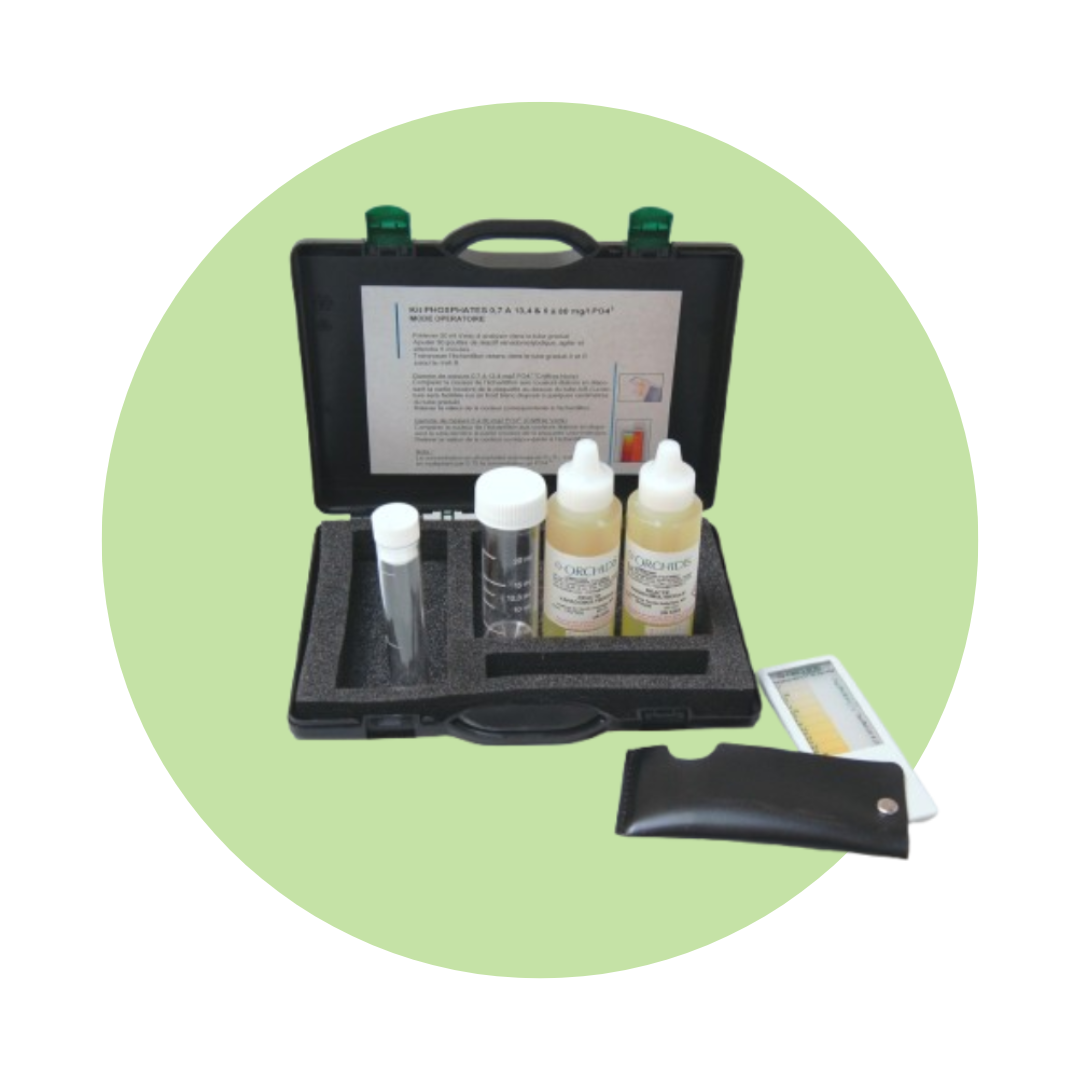
1KP004 visual phosphate kit
The AQUALABO 1KP004 phosphate kit enables colorimetric analysis of orthophosphates in water over two measurement ranges: 0.7 to 13.4 mg/L PO₄³⁻ and 6 to 80 mg/L PO₄³⁻. The principle is based on the addition of a vanadomolybdate reagent: orthophosphates form a yellow complex, whose intensity increases with phosphate concentration. The reading is then carried out by comparison with a colour chart.
This kit meets varied needs depending on user profiles: local authorities, wastewater treatment plant operators, water management stakeholders, maintenance service providers, industrial sites or water treatment professionals. It can therefore be integrated into checks on wastewater, discharge controls, technical circuit monitoring or maintenance operations.
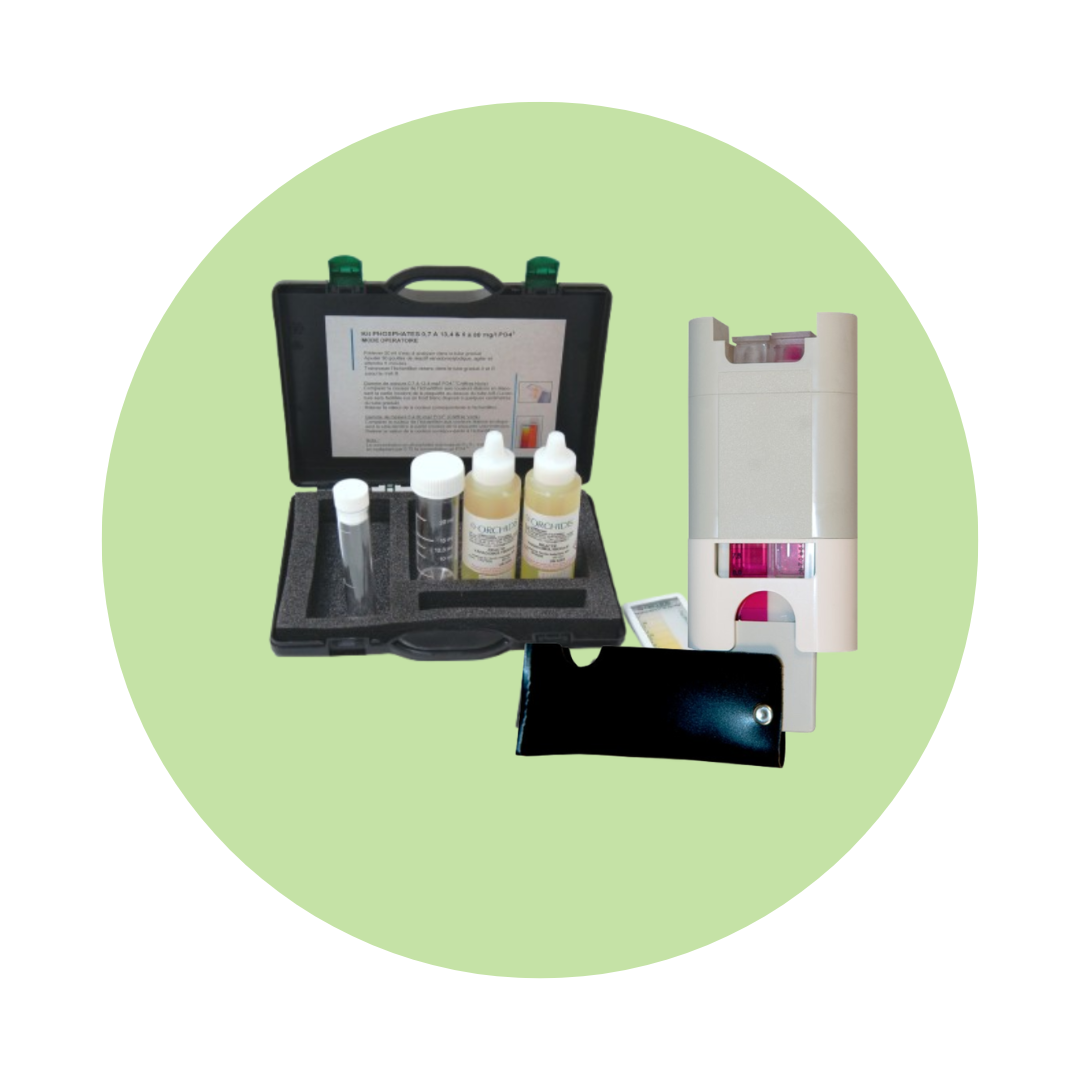
1TC082 field kit with comparator
The 1TC082 case uses the same colorimetric principle, over the ranges 0.7 to 13.4 mg/L PO₄³⁻ and 6 to 80 mg/L PO₄³⁻. Its main difference lies in the presence of a standard comparator and two cuvettes: one contains the sample with reagent, while the other contains the untreated water to be analyzed. This device facilitates visual colour comparison and limits interference linked to ambient light. It is suitable for field checks when the operator is looking for a more comfortable and more consistent reading.
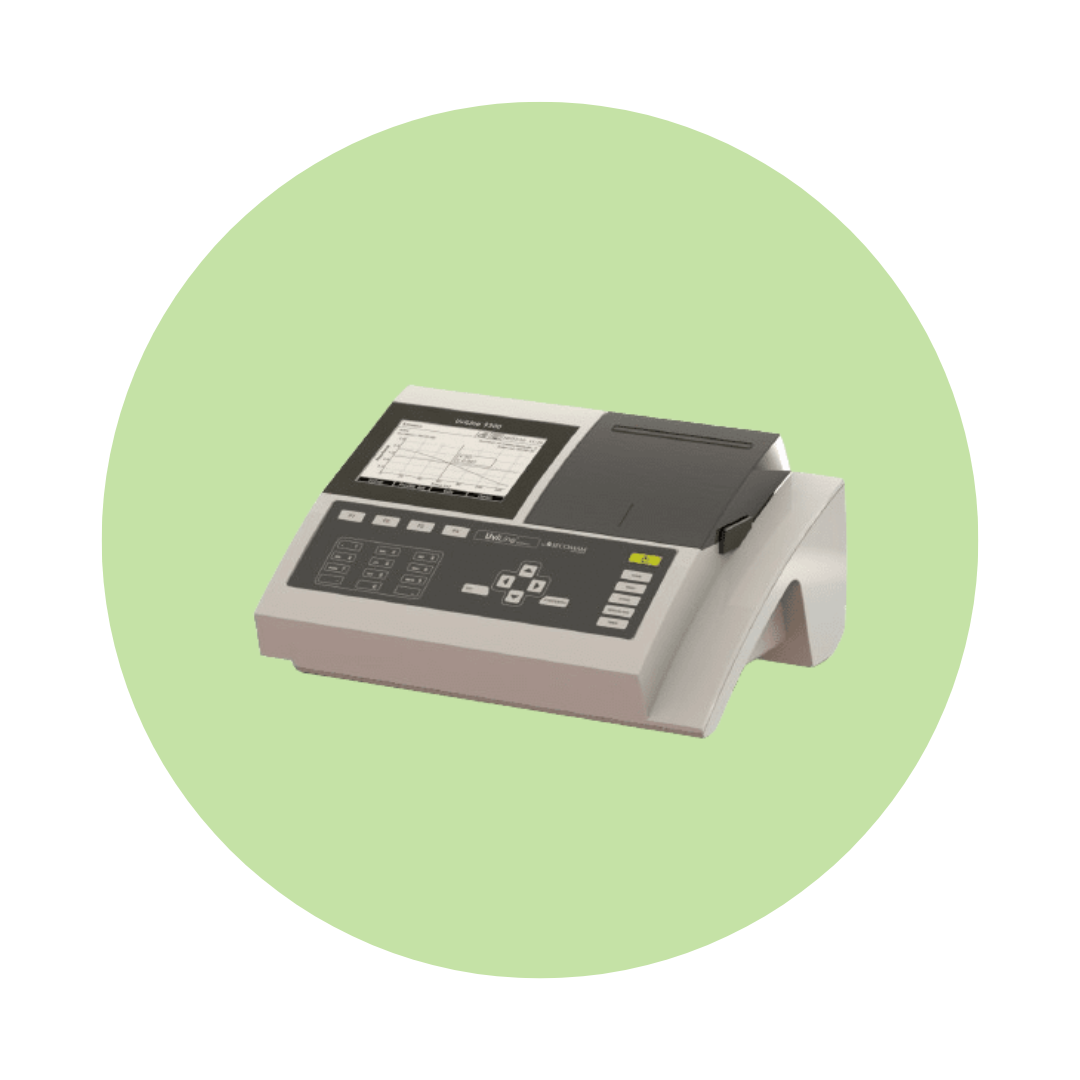
UVILINE spectrophotometer for instrumented analyses
The UVILINE spectrophotometer is suitable for instrumented analyses when the result must be more reproducible than a visual reading. Its wavelength range of 190 to 1100 nm covers the visible and ultraviolet range, with pre-recorded methods for several water quality parameters. It also makes it possible to create custom calibration curves, save results and export data to a USB key or via the SPECTRALAB software.
For phosphate analysis in water, this solution is suitable for checks requiring a numerical, traceable and more reproducible reading than visual colorimetric comparison.
Integrating phosphates into quality monitoring
Phosphate analysis in water must be defined based on field conditions: type of water tested, phosphate form sought, expected concentration range, measurement frequency and desired level of traceability. The 1KP004 visual phosphate kit, the 1TC082 case with comparator and the UVILINE spectrophotometer meet different needs: quick reading, more comfortable visual comparison or instrumented measurement.
To choose the solution best suited to your application, the AQUALABO teams can guide you and provide the corresponding product sheets.