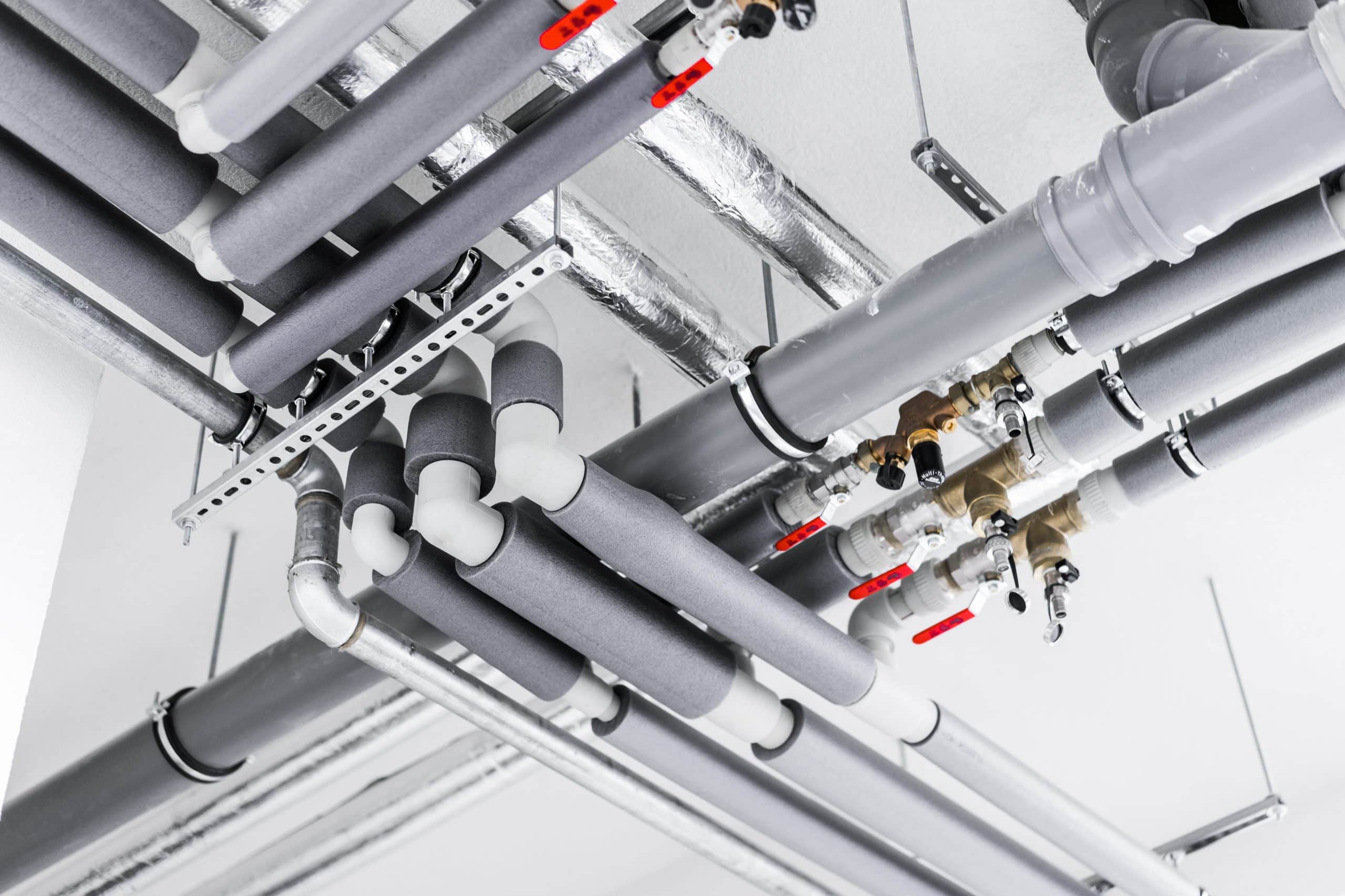
Heating circuit water check: what should be verified before commissioning?
When a heating circuit is filled for the first time, the quality of the water introduced into the system can influence start-up, adjustments and the long-term durability of the equipment. Water that is too hard, too rich in dissolved salts, unsuitable for some materials or introduced into an insufficiently flushed network can promote scaling, corrosion or deposit formation from the very first operating phases.
Checking the water in a heating circuit is therefore not only a maintenance issue. For a plumber or installer, it is also a validation step during installation, before final commissioning. A few simple on-site checks can verify whether the fill water is consistent with the installation, the materials present and the manufacturer’s technical requirements.
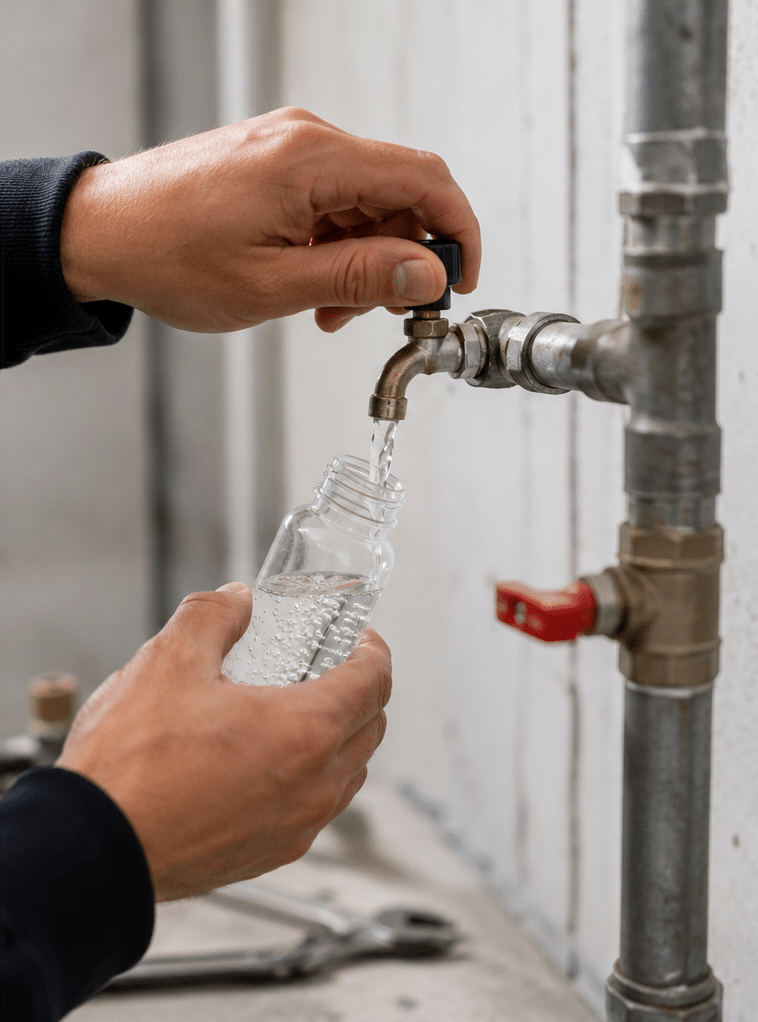
Why analyse water as soon as the circuit is filled?
Scaling and corrosion: risks that can begin as soon as the system is filled
The initial filling marks the start of the interactions between the water, the circuit materials and the installed equipment. If the water introduced is too hard, too mineralised, rich in chlorides, or if the network still contains installation residues, the first imbalances may appear before any visible effect is seen on the installation.
High hardness promotes limescale deposits in areas subject to temperature rise, especially at heat exchangers. A high chloride concentration can weaken certain materials and increase the risk of localised corrosion. Conductivity provides an initial indication of the overall ionic load of the water introduced into the circuit. These phenomena do not always cause an immediate malfunction, but they may begin as soon as filling takes place.
A useful check to secure the installation and document the intervention
For the installer, checking the water in the heating circuit provides an objective reference before commissioning. It makes it possible to verify that the water introduced into the installation does not show any notable anomaly with regard to the measured parameters and the applicable recommendations.
If an unusual value is observed, this verification helps the installer note a reservation, recommend an adjustment or direct the customer towards further checks. It also provides a useful reference point to document the intervention and support a technical decision if needed.
Flushing the system and limiting air ingress
Even before interpreting the analytical parameters, it is recommended to verify that the circuit has been properly flushed in order to remove installation residues, metallic particles, fluxes, debris or mill scale. It is also important to limit air ingress and repeated top-ups, because they introduce oxygen that can restart corrosion phenomena in a normally closed circuit.
A well vented system, properly deaerated and free from leaks will be less exposed to rapid drift after the first heating cycle. This verification usefully complements the analytical check of the fill water.
Parameters to monitor before commissioning
Before the first heating cycle, several parameters can be checked on site. The choice depends on the type of installation, the fill water, the materials present and the applicable technical recommendations. The checks below provide a useful basis for quickly assessing the water before commissioning.
Hardness: assessing the risk of scale
Hardness indicates the presence of calcium and magnesium in water. In a heating circuit, high hardness can promote limescale deposits, especially in areas exposed to rising temperature.
This check is useful when the mains water is naturally hard or when the installed equipment is sensitive to scaling. The result must be interpreted in light of the circuit volume, the operating temperature and the manufacturer’s recommendations.
pH: checking the compatibility of water with the installation
pH provides an indication of the water balance in contact with the materials of the circuit. A value that is too low or too high may promote corrosion phenomena or be incompatible with certain manufacturer recommendations.
This check alone is not enough to fully characterise the water, but it quickly identifies an unusual value before commissioning. Its interpretation must always take into account the materials present in the installation, especially when aluminium is used.
Chlorides: limiting corrosion risks
Chlorides should be monitored when the water used has an uncertain composition or when the installation contains sensitive materials. At high concentration, they can promote localised corrosion.
Measuring chlorides complements water analysis beyond hardness alone. If an unusual value is observed, the installer can note a reservation or request further checks.
Conductivity: monitoring the ionic load of the water
Conductivity indicates the overall quantity of dissolved ions in the water. A high value means the water has a higher ionic load and may be more favourable to electrochemical phenomena.
This measurement provides a quick reading of the mineral content of the fill water. It complements targeted checks such as hardness, pH or chlorides, but must always be interpreted together with them to assess the overall compatibility of the water with the installation.
To learn more about water-related issues in thermal installations, read our dedicated article on boiler water analysis.
Which tools should be used to test water on site?
On site, checks must remain simple, quick and compatible with real intervention conditions. The installer often works alone or in a small team, with limited time between the end of installation, filling, testing and commissioning. The equipment used must therefore be portable, easy to read and directly usable.
Test kits to check a specific parameter
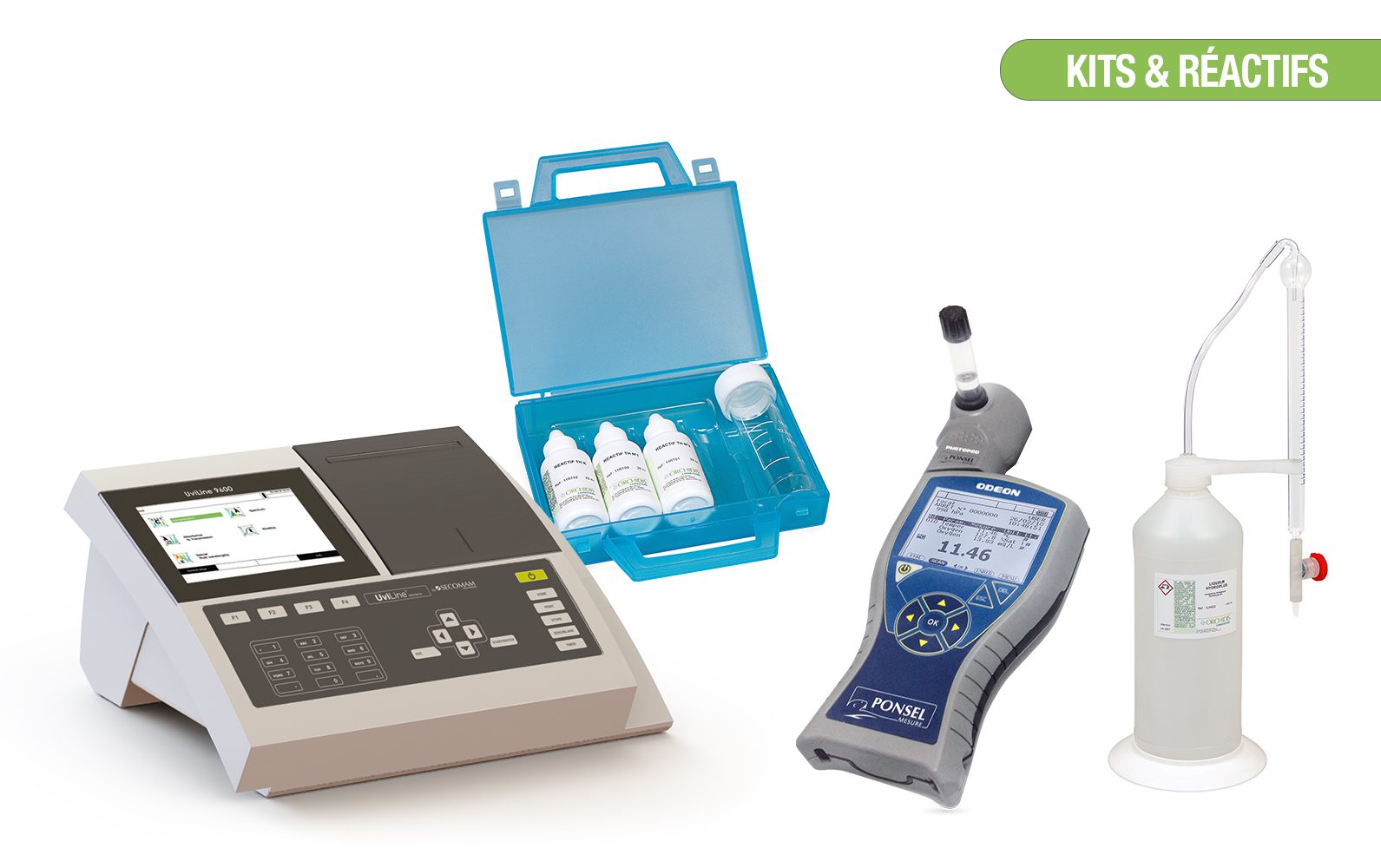
Test kits make it possible to carry out targeted checks on site, without heavy equipment or systematic laboratory analysis. They are suitable when an installer, maintenance technician or operator needs to quickly check a parameter related to water quality.
Depending on requirements, several kits are available to measure specific parameters: hardness, pH, chlorides, alkalinity, iron, sulphites or conductivity. Aqualabo’s expertise covers nearly 50 parameters in order to meet professional requirements according to the type of water, the installation and the intervention context.
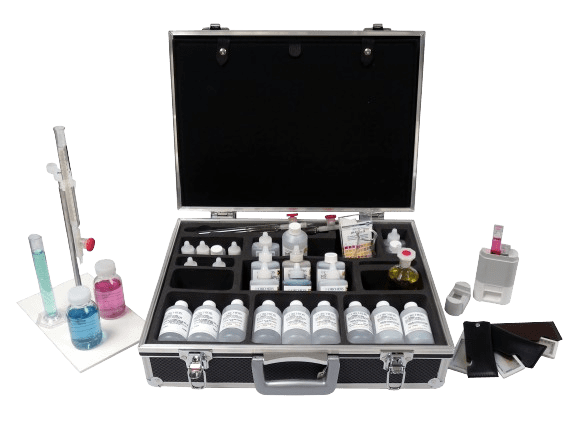
Cases to group several checks by application
When checks are carried out regularly, a test case can be used to group the reagents and accessories required for the most frequent verifications.
A field test case can be configured according to use: hardness in areas with hard water, pH to check water compatibility with the installation, chlorides in the event of corrosion risk, and conductivity to assess the overall ionic load. The aim is to have a ready-to-use set of reagents, with methods suited to the constraints of working on the customer’s site.
Aqualabo offers field test kits and cases for professionals who need to check water quality directly on site. These solutions can be configured according to the parameters to be measured, the intended applications and working habits.
Discover our case study on simplified checks in boiler room maintenance, with a concrete example of using test kits in the field.

Securing commissioning from the first intervention
Before the first heating cycle, water quality must be validated as a technical point in its own right. Hardness, pH, chlorides and conductivity provide a concrete reading of the water introduced into the circuit and the associated risks: scale, corrosion or early deposits.
With suitable kits or a test case, measurements are carried out directly on site. The results can be used immediately to confirm the compatibility of the water with the installation or identify the adjustments required before start-up.
Contact the Aqualabo teams for advice on kits suited to your applications.