Measuring Chemical Oxygen Demand (COD) in water
Water quality depends on the ability to identify and quantify pollutants likely to affect natural environments, industrial processes, or resources intended for human consumption. Among the indicators used, measuring Chemical Oxygen Demand (COD) plays a central role in assessing the overall load of oxidizable substances present in water.
In drinking water systems as well as industrial discharges, measuring COD provides a rapid and representative overview of organic and mineral pollution. This article presents the key issues related to COD, its measurement principle, application areas, and current solutions enabling reliable monitoring, including continuous on-site measurements.
What is Chemical Oxygen Demand?
COD as an indicator of water quality
Chemical Oxygen Demand (COD) is a global indicator used to estimate the quantity of oxidizable substances present in a water sample. It provides, in a single measurement, an assessment of the pollutant load likely to consume oxygen during chemical reactions.
Measuring COD delivers a concise reading of pollution load, applicable both to resources intended for human consumption and to effluents from industrial activities. In a context of stricter environmental regulations, resource protection, and industrial process optimization, COD measurement has become essential.
Understanding COD: definition and principle
COD corresponds to the amount of oxygen required to chemically oxidize all oxidizable matter contained in water, whether organic or mineral.
The result is expressed in milligrams of oxygen per liter (mg O₂/L). The higher the COD value, the greater the oxidizable load. This measurement therefore provides a rapid characterization of potential pollution levels.
Unlike Biochemical Oxygen Demand (BOD), which measures only the biodegradable fraction of pollution over several days, COD accounts for all oxidizable compounds and delivers fast results. It is particularly suited to situations requiring immediate water quality assessment, notably for discharge monitoring or treatment control.
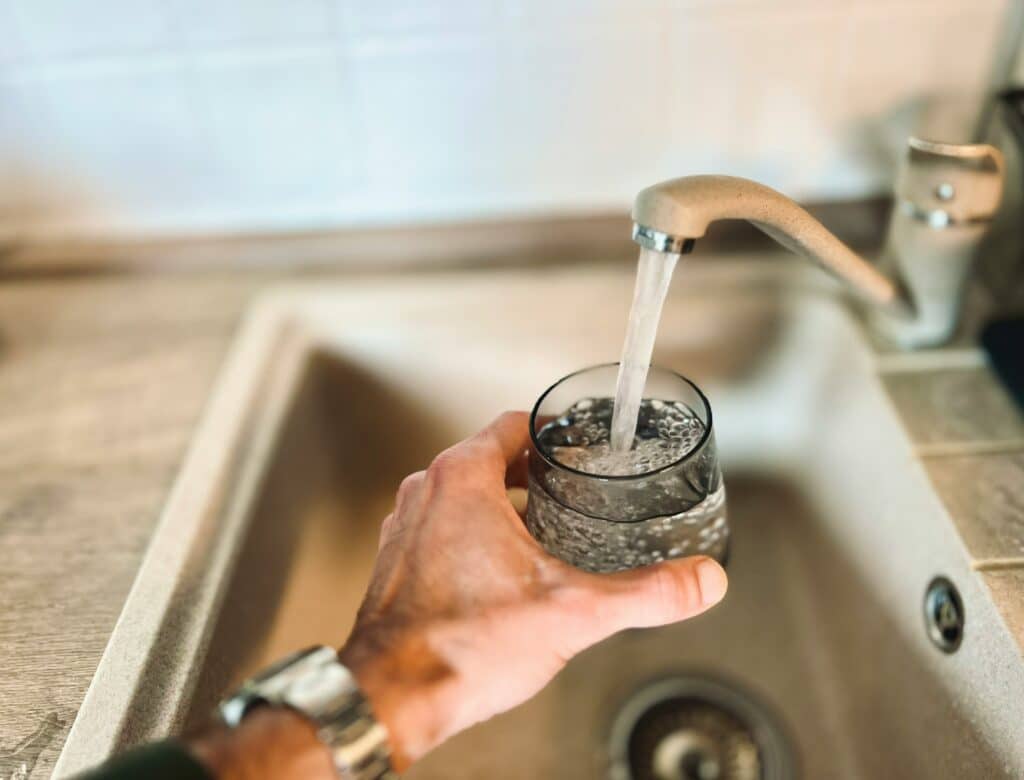
Why measure COD in drinking water?
In the drinking water sector, COD serves as a complementary monitoring indicator to assess the overall quality of the resource before, during, or after treatment. It provides a useful, synthetic input for plant operation.
Overall water quality assessment
In raw waters intended for drinking water production, parameters such as conductivity, turbidity or dissolved organic carbon do not always fully reflect the total oxidizable load. Measuring COD helps detect the presence of compounds likely to impair water quality or interfere with treatment processes.
Securing treatment processes
The presence of oxidizable matter can affect the efficiency of physico-chemical or biological treatments. A high COD may, for example, increase reagent consumption or promote the formation of undesirable by-products during disinfection.
Monitoring COD enables analysis of process stability and assessment of the effectiveness of treatment stages over time. This approach strengthens health safety and the stability of drinking water production.
Continuous monitoring and prevention
In certain configurations, occasional laboratory testing may be insufficient to rapidly detect accidental pollution. Continuous COD measurement then provides an effective prevention tool. A sudden change in COD can signal upstream contamination at the intake or a treatment malfunction. Integrated into a supervision system, this information enables operators to act quickly and limit impacts on distributed water quality.

Why measure COD in industrial waters and discharges?
In the industrial sector, COD is a reference parameter for effluent control and process monitoring. It is a key indicator for meeting regulatory requirements and managing the environmental impact of discharges.
Regulatory compliance
COD measurement is commonly required in industrial discharge permits. It verifies compliance with imposed limit values and ensures effluents meet requirements before discharge into the natural environment or collective networks.
Exceeding COD limits may indicate organic overload, a process incident, or inadequate treatment. Regular monitoring is therefore essential to reduce non-compliance risks and associated penalties.
Process optimization
Beyond regulatory aspects, measuring COD provides a powerful tool for managing industrial processes. By tracking COD at different stages, operators can evaluate treatment efficiency, identify internal pollution sources, and optimize water and reagent consumption.
This approach improves overall plant performance, reduces operating costs, and better controls pollutant loads generated by industrial activities.
Protection des milieux naturels
Industrial discharges with high COD can significantly consume dissolved oxygen in receiving waters, impacting aquatic ecosystems. COD control limits these effects by ensuring discharged effluents remain compatible with the self-purification capacity of the environment. COD measurement thus supports a sustainable approach to water resource protection.

COD measurement methods: toward modern solutions
Laboratory COD measurement
COD analysis can be performed in laboratories using methods based on chemical oxidation followed by quantification. This approach offers good accuracy and remains a reference for certain controls. However, it involves analysis delays, chemical reagent handling, and does not allow real-time tracking of rapid pollution variations.
On-site COD measurement: what solutions?
Today, solutions enable COD measurement directly on site, without waiting for laboratory results. These technologies notably rely on optical methods, such as UV analysis, providing continuous and indirect COD estimation.
UV analysis and continuous monitoring
Multiparameter UV analyzers measure water absorbance at specific wavelengths correlated with the presence of oxidizable organic matter. This approach enables continuous COD measurement without reagents and with reduced maintenance.
These instruments are particularly suited to installations requiring permanent monitoring, such as treatment plants, industrial discharges, or sensitive water intakes.
AQUALABO solutions for COD measurement
Aqualabo offers reagent-free UV measurement solutions adapted to continuous or spot COD monitoring. Available as immersed probes, online analyzers, and portable instruments, they meet the requirements of applications in natural waters, urban sanitation, and industrial discharges.
Real-time multiparameter UV analysis
UV technologies enable simultaneous monitoring of several water quality indicators, such as COD, BOD, Total Organic Carbon, nitrates, or UV254 absorbance. This approach ensures continuous surveillance, facilitates process control, and supports regulatory compliance.
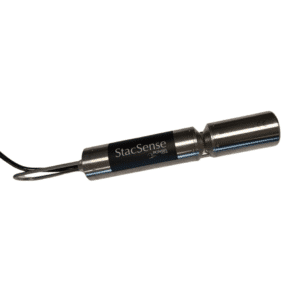
STACSENSE UV254 probe
The STACSENSE UV254 probe enables monitoring of SAC254, as well as COD, BOD, and Total Organic Carbon equivalents. Based on UV optical technology, it delivers reliable measurements without reagents. Its multiparameter design makes it suitable for environments requiring continuous monitoring with low maintenance constraints.
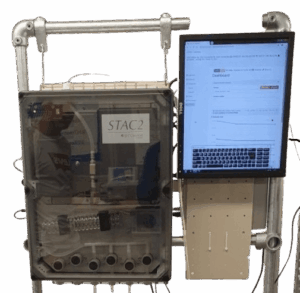
STAC2 multispectral UV/Vis analyzer
The STAC2 range is based on multispectral UV/Vis technology, enabling online monitoring of multiple parameters, including COD, BOD, Total Organic Carbon, Total Suspended Solids, and nitrates. Thanks to its robust design and extended measurement capabilities, this analyzer integrates into installations requiring comprehensive and long-term water quality monitoring.
Measuring COD to better control water quality
Measuring Chemical Oxygen Demand is essential for understanding, monitoring, and controlling water quality, whether for resources intended for consumption or industrial discharges. Thanks to its ability to rapidly reflect changes in oxidizable load, COD is a strategic indicator for anticipating deviations and securing installations.
Aqualabo supports operators and industrial stakeholders with modern measurement solutions adapted to regulatory and operational requirements, ensuring reliable and responsive COD monitoring.